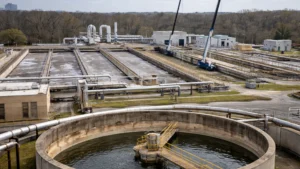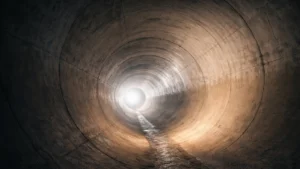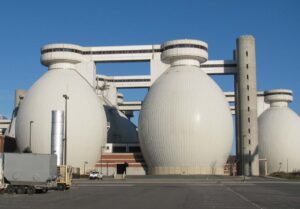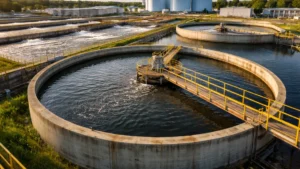



Corrosion and other forms of materials degradation represent some of the most persistent and consequential failure mechanisms affecting municipal wastewater infrastructure. Metallic and reinforced concrete assets are routinely exposed to aggressive service environments that significantly accelerate deterioration relative to typical atmospheric or clean water immersion conditions. As a result, many wastewater assets experience service lives substantially shorter than their original design intent.
Unlike sudden or accidental failures, corrosion in wastewater facilities is generally a systemic and progressive process. Continuous moisture, cyclic wet–dry conditions, hydrogen sulfide gas, acidic condensate, chlorides, and microbiologically active biofilms act concurrently to drive predictable corrosion mechanisms. In many cases, corrosion initiates early, progresses unnoticed, and becomes apparent only when structural integrity, operability, or safety is compromised.
The following sections summarize, in no particular order, ten of the most common corrosion and materials issues observed in wastewater systems, focusing on recognized mechanisms and practical implications for design, detailing, fabrication, and maintenance.
Stainless steels are frequently specified in wastewater facilities based on their reputation for corrosion resistance. In practice, wastewater environments often undermine the properties that provides stainless steels with their corrosion resistance, leading to localized corrosion rather than uniform material loss.
Chlorides, low dissolved oxygen levels, hydrogen sulfide atmospheres, acidic condensate, and microbiologically influenced corrosion (MIC) promote pitting and crevice corrosion. Biofilms and deposits further intensify localized attack by creating aggressive micro‑environments at the metal surface, even when conditions appear acceptable.
Typical 304/304L and 316/316L austenitic grades are susceptible to pitting when placed in environments with high chloride levels. The following information is a rule of thumb based on chloride level exposure in water:
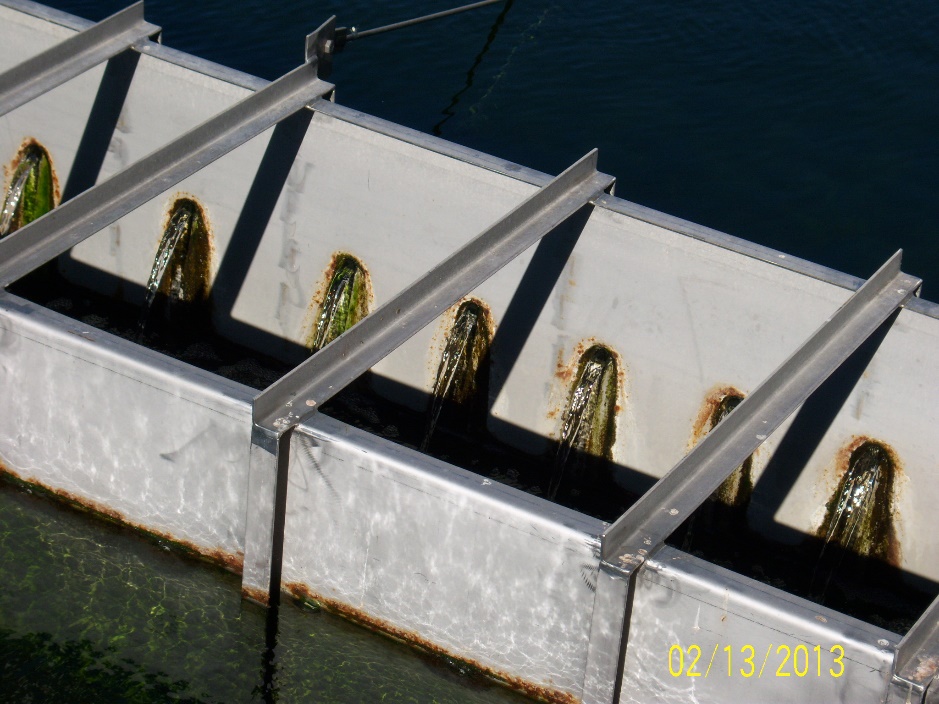
It is imperative that the chloride level in the waste stream is identified and fully understood to be able to make proper decisions on the correct grade of stainless steel. Additionally, higher alloy grades or additional corrosion protection may be required where chloride levels can concentrate (e.g., at the waterline, in crevices, and under deposits), see Figure 1.
Fabrication quality also strongly influences performance. Welds, surface roughness, heat tint, and free iron contamination are common locations and conditions where corrosion initiates. In many installations, weld‑related corrosion governs service life regardless of alloy grade.
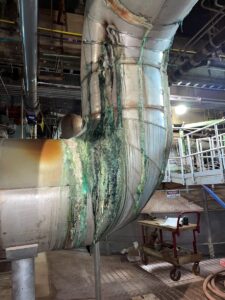
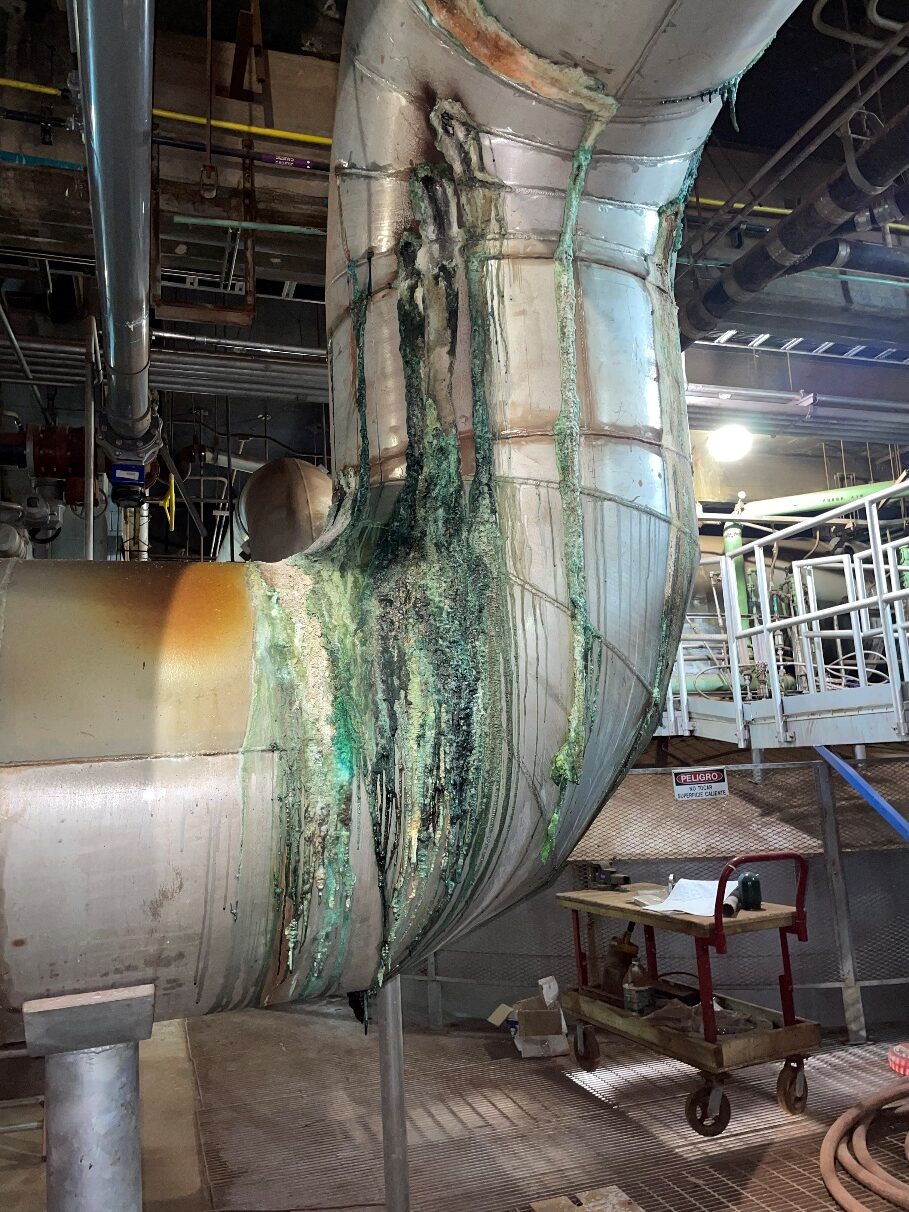
Corrosion of stainless steel occurs not only in lower-temperature water environments, but also in high-temperature, gaseous atmospheres in biosolids processing (Figure 2). Such conditions can lead to attack by molten salts, sulfide-containing gases, or acidic condensed gases.
Aluminum is an amphoteric metal with corrosion resistance in environments that have a pH that is within a relatively narrow range, generally between approximately 4.5 and 8.5. Outside this range, aluminum corrodes readily when wetted, particularly under conditions common in wastewater service.
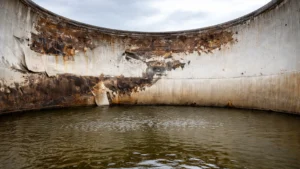
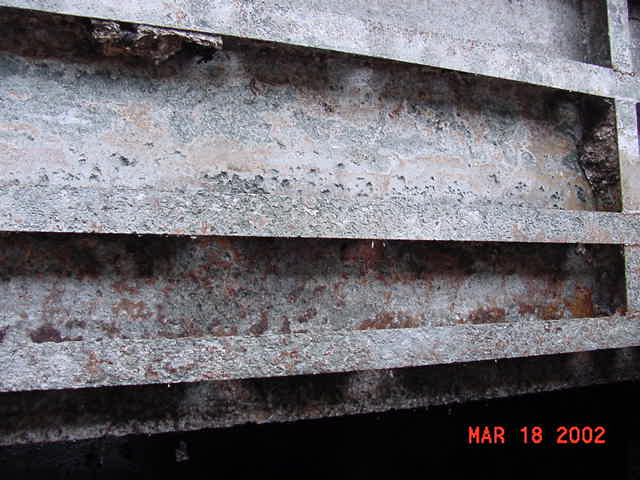
High chloride concentrations, the presence of embedded iron in aluminum surfaces, hydrogen sulfide headspaces with acidic condensate (Figure 3), continuous immersion, and galvanic coupling to more noble metals all contribute to accelerated aluminum corrosion. Wet, high‑pH environments are also incompatible with long‑term aluminum performance.
Because wastewater exposure conditions frequently exceed aluminum’s stability limits, aluminum should be used selectively and only where exposure conditions can be clearly defined and controlled.
In wastewater environments, coating and lining performance is governed far more by film continuity than by dry film thickness (DFT). That is not to imply that the correct DFT is not essential; however, pinholes or other similar defects often cause more immediate catastrophic failures. Defects such as pinholes, holidays, or thin edges can become life‑limiting, allowing rapid under‑film corrosion and delamination.
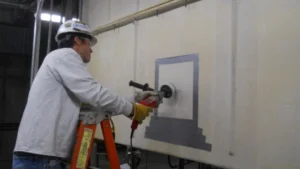
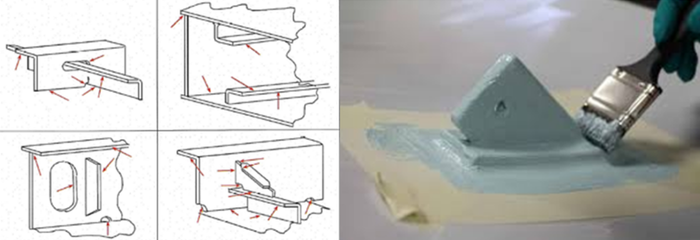
Steel substrates require stripe-coating at welds, edges, corners, bolted connections, and attachments (Figure 4) to achieve adequate film build. On concrete substrates, bugholes and surface voids must be opened, filled, and properly surfaced during the filler or surfacer stage to prevent persistent pinholing.
Application conditions also play a critical role. Concrete coatings and linings applied while substrate temperatures are rising are susceptible to the formation of out‑gassing pinholes. Concrete should always be coated when the ambient temperature is stable or decreasing. This is often best achieved by applying the coating or lining in late afternoon or early evening to prevent pinholes from forming. Holiday testing is an essential quality‑control step, but it cannot compensate for poor surface preparation or application practices.
Proper concrete surface preparation is a fundamental requirement for the long‑term performance of coatings and linings in wastewater service. Substrates must be sound, hard, and free of laitance, loose material, and dust before coating application.
Adequate concrete surface profile must be achieved in accordance with ICRI Technical Guideline 310.2R, “Selecting and Specifying Concrete Surface Preparation for Sealers, Coatings, Polymer Overlays, and Concrete Repair.” Brush or broom finishes do not provide sufficient profile for reliable mechanical bond of linings in wastewater immersion service. Brush or broom finishes may be suitable for some atmospheric applications or in manholes where immersion is not anticipated. Pressurized water cleaning in accordance with AMPP SP21548, “Pressurized Water Cleaning of Concrete and Cementitious Materials—Thorough Cleaning,” or preparation by dry or wet abrasive blasting in accordance with SSPC-SP CAB-1, “Abrasive Blast Cleaning of Concrete and Cementitious Materials – Thorough Blast Cleaning,” are the only appropriate surface preparation methods for concrete structures being placed in immersion or submerged conditions.
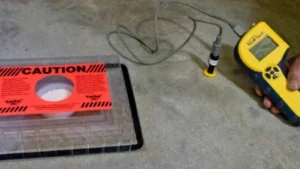
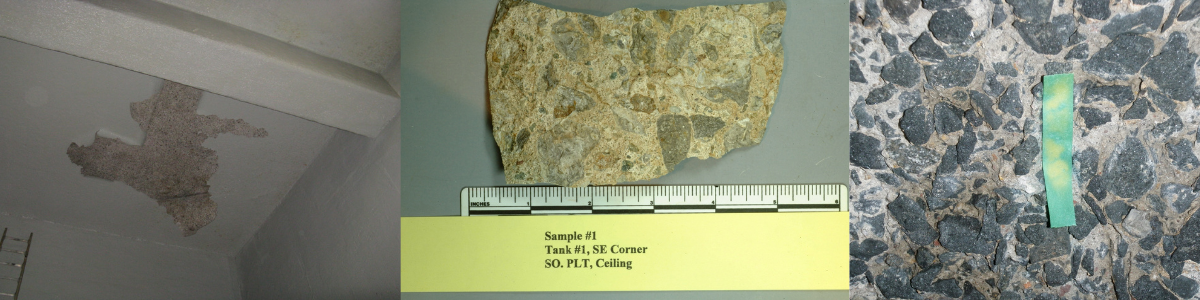
Concrete that has undergone acidic or sulfate attack must be removed to chemically stable material. Concrete pH provides a useful indicator of degradation depth, and superficial preparation alone is insufficient where chemical attack has penetrated deeper into the Portland cement matrix. The ideal pH of concrete is pH 10 for the installation of resurfacing mortar or linings; however, a minimum of pH 9 may be acceptable in some instances. Failure to meet this criterion will adversely affect the lifecycle of the applied system (Figure 5).
Galvanic corrosion occurs when two dissimilar metals are electrically connected and exposed to a common electrolyte (Figure 6). Corrosion of the more active (anodic) metal is accelerated, while the more noble (cathodic) metal is protected. These conditions are routinely present in wastewater facilities, making galvanic corrosion a frequent cause of localized failure.
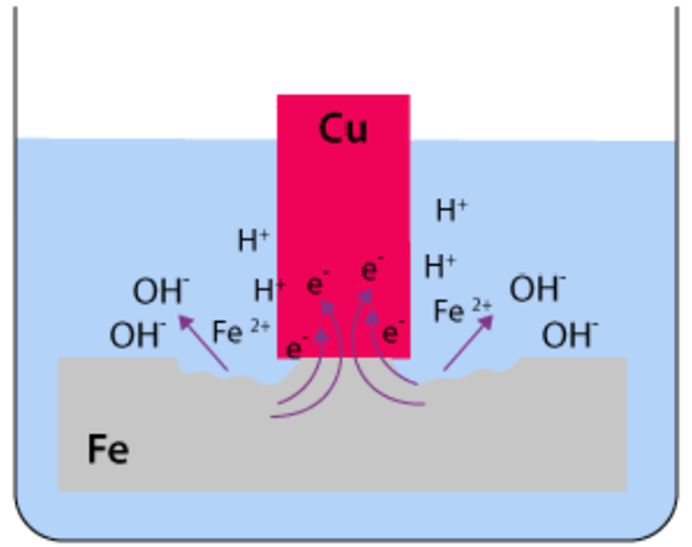
The relative exposed surface areas of the anodic and cathodic materials strongly influence corrosion severity. When a small anodic component is coupled to a large cathodic surface, high corrosion current density develops at the anode, resulting in rapid, localized attack.
Fasteners, brackets, supports, and transition components commonly become life‑limiting when galvanic principles are not addressed during design and detailing.
Inter‑coat adhesion failure is a common and often hidden cause of coating breakdown in wastewater facilities. These failures typically occur when coatings are applied outside specified recoat windows.
Another major cause of poor inter-coat adhesion that leads to delamination is amine blush (Figure 7). Amine blush can manifest as a greasy or sticky byproduct (carbamate) that forms on the surface of a curing epoxy coating. It occurs when amine hardeners react with moisture and carbon dioxide in the air, particularly in cold or humid conditions. It often appears as a white, cloudy haze. Certain epoxy coatings are susceptible to amine blush formation under cool or humid conditions. If not removed prior to recoating, amine blush creates a weak interfacial layer that promotes delamination. Excessive film thickness and cure‑related stress can further contribute to adhesion failure.
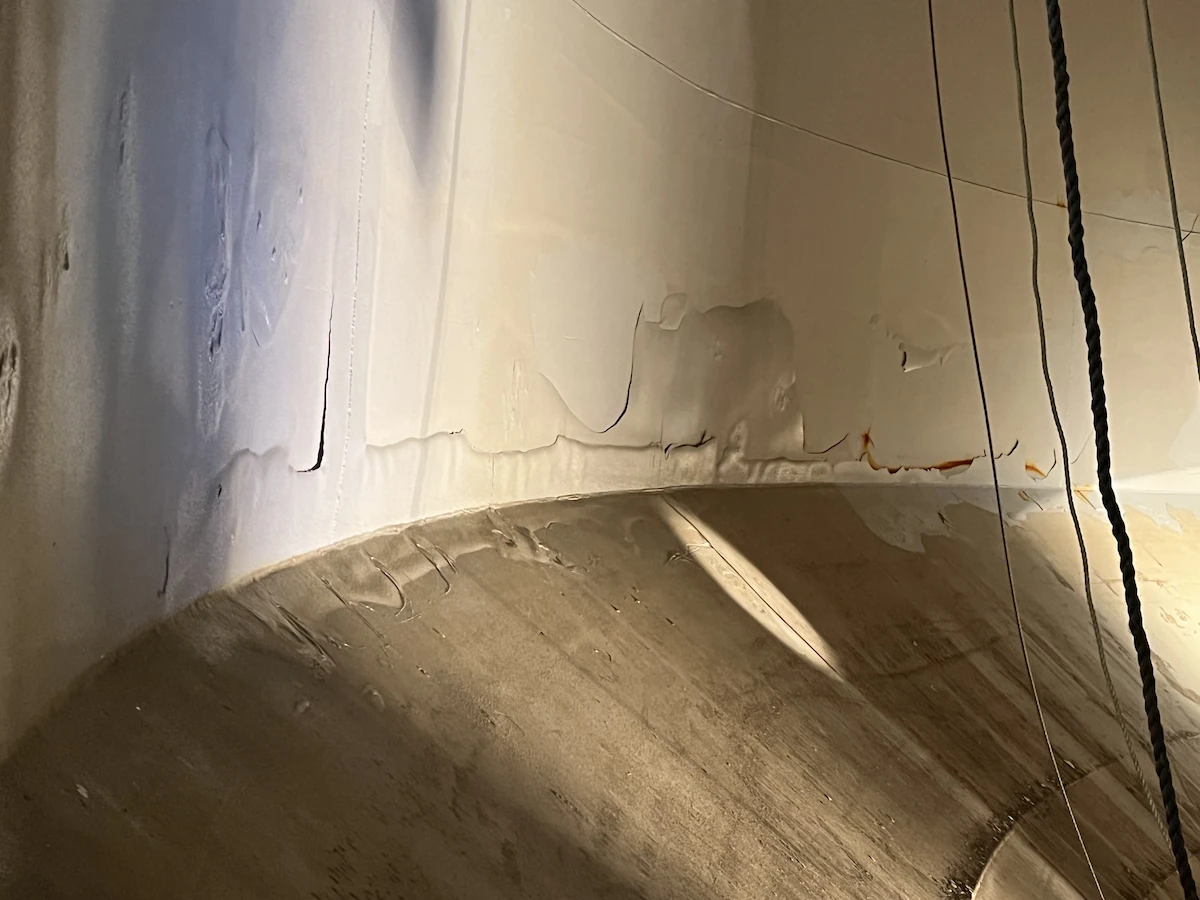
Because inter‑coat failures often progress beneath intact surface layers, damage may remain undetected until advanced deterioration has occurred.
Cathodic protection (CP) is an effective corrosion control method when applied under appropriate conditions. It performs best on buried or fully immersed metallic systems with well‑defined electrical boundaries and good bonded coating systems.
CP effectiveness is limited or problematic in alternately wet‑dry environments, water storage tanks, wastewater clarifiers, polyethylene‑encased ductile iron piping, and certain prestressed concrete cylinder pipe applications. Electrical isolation and continuity, including bonding of non-welded joints, are essential (Figure 8).
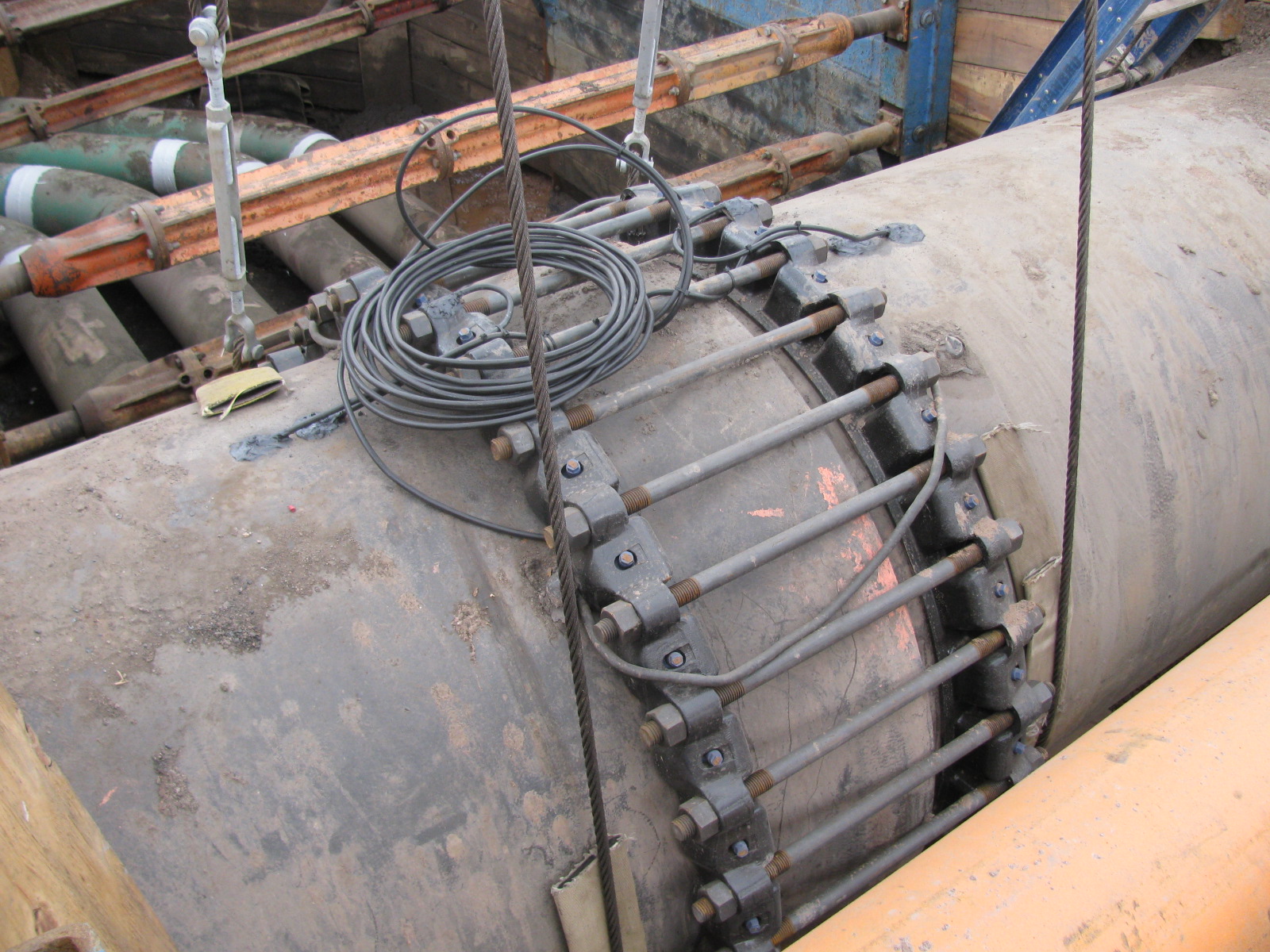
Both sacrificial anode and impressed current systems require proper design, construction, monitoring, and maintenance to avoid unintended consequences such as under‑protection or over‑ polarization.
Protective coatings and linings on concrete tanks and structures rarely fail in flat areas. Failures most often initiate at details such as terminations, penetrations, embedments, and abrupt geometry transitions.
Abrupt edges and geometry changes reduce coating thickness and increase localized stress. Proper termination detailing, gradual transitions, and toe‑in of linings onto metal embedments are essential to preventing fluid ingress and undercutting corrosion (Figure 9).
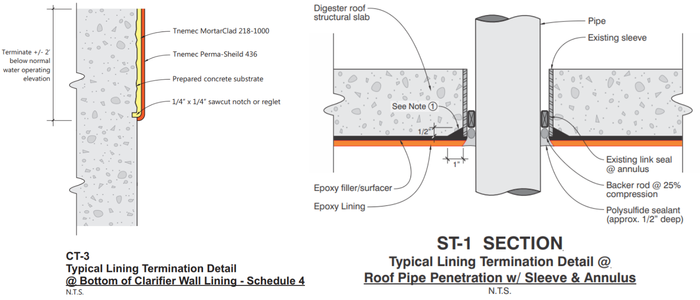
During the curing process, protective coatings and linings shrink through a chemical process referred to as cross-linking. As the material cures and cross-links, the coating or lining shrinks back, which can have detrimental effects on both the inside and outside of 90-degree angles at floor-to-wall, wall-to-wall, and wall-to-ceiling transitions, as well as at pipe penetrations. It is essential that a minimum 1-inch radius or a cant cove (45-degree bevel) is installed to provide a softer transition.
It is also essential that linings in immersion/submersion conditions always finish into a minimum ¼-inch by ¼-inch sawcut keyway to ensure the film is never undercut leading to delamination.
Stainless steel gets its corrosion resistance from formation of a thin, passive, chromium oxide surface film. The heat tint formed on the surface of the stainless-steel during welding represents a chromium oxide with impurities and a dramatically lower corrosion resistance. Welding, grinding, and other fabrication processes also result in surface contamination by iron particles and other foreign materials (Figure 10).
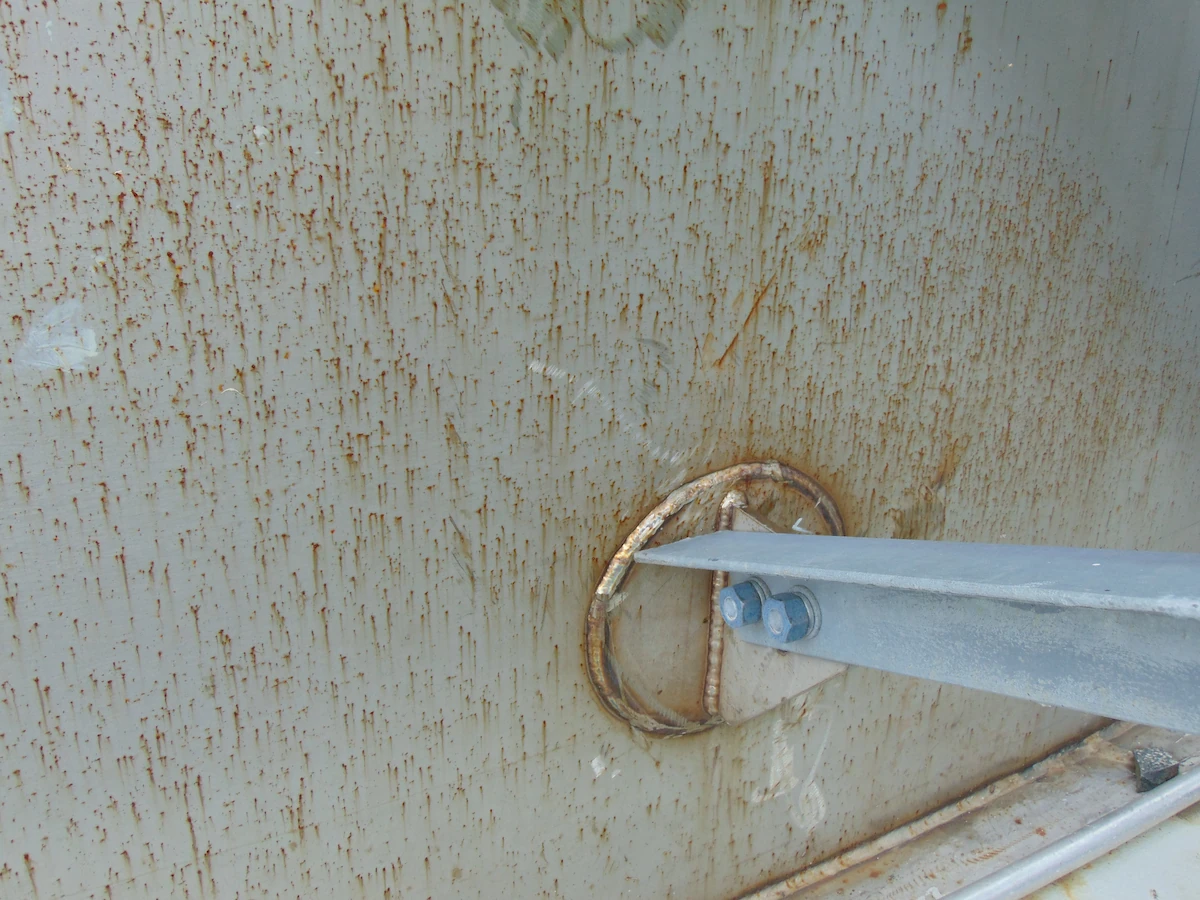
It is important to understand when post‑fabrication surface treatments, such as cleaning, descaling, and passivation are required. Descaling (heat tint removal) can be accomplished by mechanical methods (bead blasting, grinding), chemical methods (acid pickling), or electrolytic weld cleaning. Passivation is the process of removing any combination of contaminant iron, alloyed iron, and possibly other foreign matter from the stainless-steel surface, thus removing a localized impediment to the formation of the passive metal oxide film. ASTM Standards A380, “Standard Practice for Cleaning, Descaling, and Passivation of Stainless-Steel Parts, Equipment, and Systems,” and A967, “Standard Specification for Chemical Passivation Treatments for Stainless Steel Parts,” are excellent references for the methods, materials, and verification for these processes.
Zinc is a sacrificial, amphoteric metal that is not thermodynamically stable in most wastewater environments. Its corrosion resistance depends on stable calcium carbonate scale formation, which wastewater chemistry rarely supports.
Hot‑dip galvanized steel performs poorly in immersion and continuously wetted service and should not be coated over due to preparation challenges and risk of under‑coating corrosion. Acceptable use is generally limited to atmospheric exposure where time of wetness is infrequent and surfaces dry completely.
As described above, corrosion and other materials deterioration-related failures in wastewater infrastructure consistently follow recognized mechanisms. Premature deterioration is rarely accidental; it is the predictable outcome of incompatible material selection, inadequate detailing, and insufficient control of exposure conditions. Too often these issues are missed because corrosion/materials specialists are not engaged in municipal wastewater infrastructure projects. Application of corrosion engineering principles during design, fabrication, detailing, and construction is essential to achieving intended service life and controlling lifecycle cost.