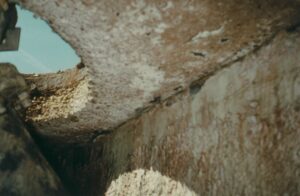
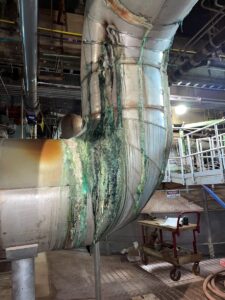
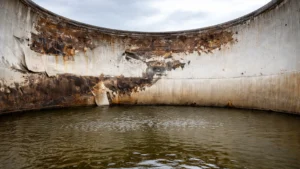
When it comes to protecting municipal infrastructure sewer collection assets against degradation and corrosion from destructive H²S gases and Microbiological attack, there is no shortage of opinions on what the correct method/product is to use or how thick that protective layer should be. The products available range from reinforced cementitious mortars to high build epoxy, high build polyurethane and Polyurea to more synthetic products such as polyethylene plastic products, and the list goes on. How is someone to discern which is right, where is it needed and how much is needed to offer the correct protection and asset life cycle.
The devil is in the details. It really depends on what the municipalities expectations are, how much money they have to spend vs the need that exists. In a perfect world, where unlimited financial resources were available, I would suggest that the longest life cycle would be observed by repairing all structural defects and degradation using a high-quality fiber reinforced mortar and installing a resinous polymer lining in every manhole. This is an expensive option however, when properly installed it would provide protection for 40-50 years with regular inspection and maintenance. Most municipalities that I have encountered simply do not have the financial resources to take this approach. The cost per vertical foot for such as system could range from $250-$550 depending on geographic location.
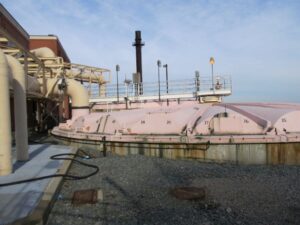
The truth lies in researching and knowing where the biggest threats of attack are occurring within the system. Typically, the highest levels of corrosive gases are found in the most turbulent areas. Areas with high flow and turbidity strip the H²S out of the aqueous form and turn it into gas which then is deposited on the asset surfaces. High turbulent areas of the collection system include Lift/Pump Stations, wet wells, force mains and the manholes immediately downstream of these assets. It is in these turbulent H²S rich areas that the most robust protection is required. This is where a municipality will get their best value by specifying a reinforced mortar at ¼” to ½” thickness (depending on concrete condition) followed by 80-125 mils of resinous polymer material.
Other than these turbulent areas where the H²S values are highest, lining manholes with standalone cementitious mortars can be an excellent choice. Installing cementitious mortars as linings can save the municipality money or allow them to rehabilitate more structures within their budget. Cementitious mortars will react similar to the original substrate to high H²S levels but as the H²S levels decrease in a system, or are low enough to begin with, cementitious mortars can provide 15 – 20-year life cycles with an ongoing maintenance plan. A rule of thumb of what system to use and where to use it is as follows.
- H²S level > 50PPM as resinous polymer liner should be installed for maximum protection.
- H²S level 25-50PPM a switch to a Calcium Aluminate mortar will provide corrosion protection.
- H²S values below 25PPM or when the repair is simply due to structural issues a switch to a standard Microsilica mortar is a definite option.
Using this principal, a complete rehabilitation plan does not have to be a one product that fits all scenario. I believe in a multifaceted approach.
- High turbulence, high H²S areas and the first 3-5 manholes downstream of the lift station or force main (>50PPM high turbulence high H²S) and perhaps the first 3-5 manholes downstream of the lift station or force main- Mortar Resurfacer/Resinous Lining-(Epoxy, Polyurethane, Polyurea, Hybrid)
- Moderate H²S areas (25-50 PPM)- Calcium Aluminate Mortar Standalone Liner- After the 3-5 manholes downstream of the lift station or force main. This can be carried right through to the next lift station.
- Low H²S areas (0-25PPM) or structural repairs when no H²S is present- Microsilica Mortar Standalone liner.
Following this principal, a municipality can protect their assets properly and rehabilitate more structures with the same budget money. It is extremely important to note that as part of any sewer collection rehabilitation project, before any lining or repairs are done that all inflow and infiltration issues are addressed up front with the appropriate polyurethane injection grout. Afterall one of the biggest challenges affecting municipal budgets and wastewater treatment capacities is unnecessarily having to treat ground water entering the system through cracks and voids in the system.
Now seems to be as good a time as any to speak to the various resinous polymer options that are available on the market for this type of application and what is the correct film thickness needed to provide corrosion protection. Your most common resinous polymer lining choices will be high build 100% solids epoxy, elastomeric polyurethane, rigid polyurethane or elastomeric polyurea. I do prefer epoxy liners, and I would love to explain my theory as to why I think Epoxy is by far the best option, however this is not the basis of this discussion. Maybe for another article.
I am seeing a consistent rise in the dry film thickness values for resinous linings showing up on rehabilitation projects. For many years the standard for this application and severe wastewater service has been 80-125 mils. Now I am seeing specifications calling for 250 -300 mils of resinous liner in manholes rehabilitation projects. Sorry folks but this is simply an unnecessary waste of municipalities budget dollars. At 80-125 mils the top end (125mils) is already sufficiently over engineered to capture worst case scenarios. There is absolutely no need to apply more than 125 mils in any wastewater structure unless you are using a resinous epoxy aggregate filled mortar as your filler & finished liner in one application. If you are rehabilitating the structure with cementitious mortar to bring the surface back to original plane and address all voids, bugholes and defects, 80-125 mils of resinous liner is absolutely all you need for maximum protection. I work for a coatings/linings manufacturer, and we all get paid based on how our company performs, however in good conscience I have to say that the only reason to ever have more that 125mils is merely to sell more products. The lifecycle gains are simply not there to justify the doubling the cost. There is no evidence to prove differently. More lining is better than not enough, however once you get above 125 mils there are severely diminishing return on investment.