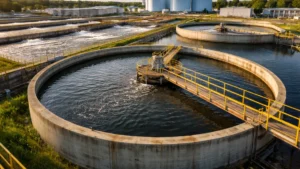

Biogenic sulfide corrosion and other damage mechanisms must be prevented in odor generating environments and odor control systems through careful design. Corrosion is invariably the companion of odor in water reclamation collection systems and treatment plants. Its costs to infrastructure are exorbitant for water reclamation utilities, not to mention its public image and environmental impacts. Therefore, corrosion damage must be prevented both in structures and conduits in which wastewater odors are generated and collected. But the right preventative measures must also be taken within the odor control treatment systems.
The headspaces where biogenic sulfide corrosion flourishes due to the liberation of hydrogen sulfide gas and other active sewer gases must be protected. These headspace substrates are part of the odor control systems and include concrete, ductile iron, stainless steel, aluminum, FRP and other materials. Applications include tank and clarifier covers and headspaces, gates and dampers, ductwork, scrubbers, and absorbers, etc. The materials involved in foul air collection and treatment systems necessary for odor control and prevention must be designed and constructed to prevent or slow corrosion deterioration to optimize service life. This can be achieved by constructing these system components from materials which resist sewer gas permeation, acidic attack, and other damage mechanisms or via the use of a protective coatings. In addition, it can be enhanced through adequate ventilation design and operation, or through chemical treatment efforts.
This paper discusses the essential fundamentals of the commonplace corrosion damage mechanisms and provides case histories for the same. These include:
In addition, guidance for successful corrosion mitigation materials and methods are presented including:
In the main, the focus of this paper will be to acquaint the readers with how corrosion degrades odor control system components and how to avert this costly damage to achieve asset reliability.
Biogenic sulfide corrosion occurs when H2S gas is stripped out of solution. The H2S gas is absorbed into condensed water along the surfaces of structures, where naturally occurring sulfur oxidizing bacteria metabolize H2S to (H2SO4). This acid reacts with the highly alkaline hydrated cement paste in concrete, which causes dissolution of that paste and leaves inert coarse aggregate exposed. This can ultimately result in structural damage to reinforced concrete. Sulfuric acid also causes metal corrosion.
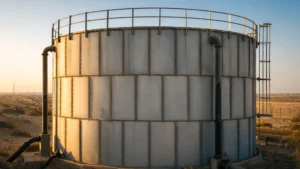
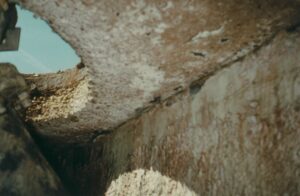
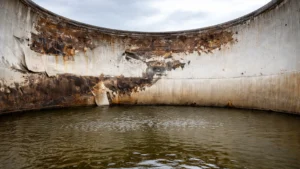
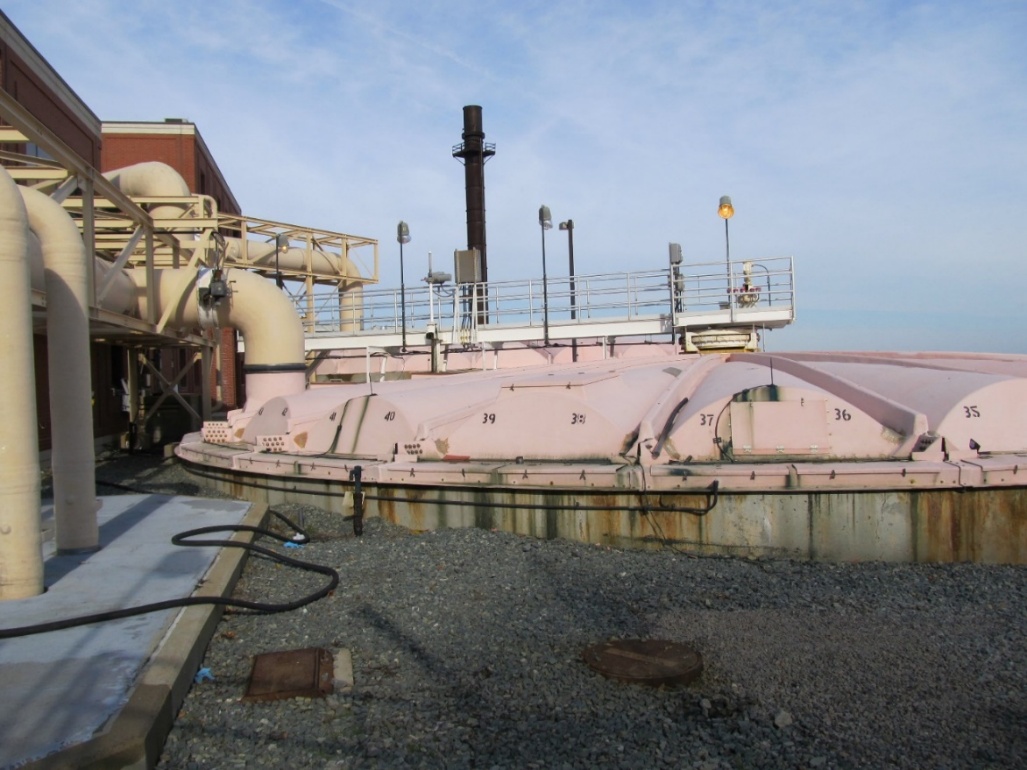
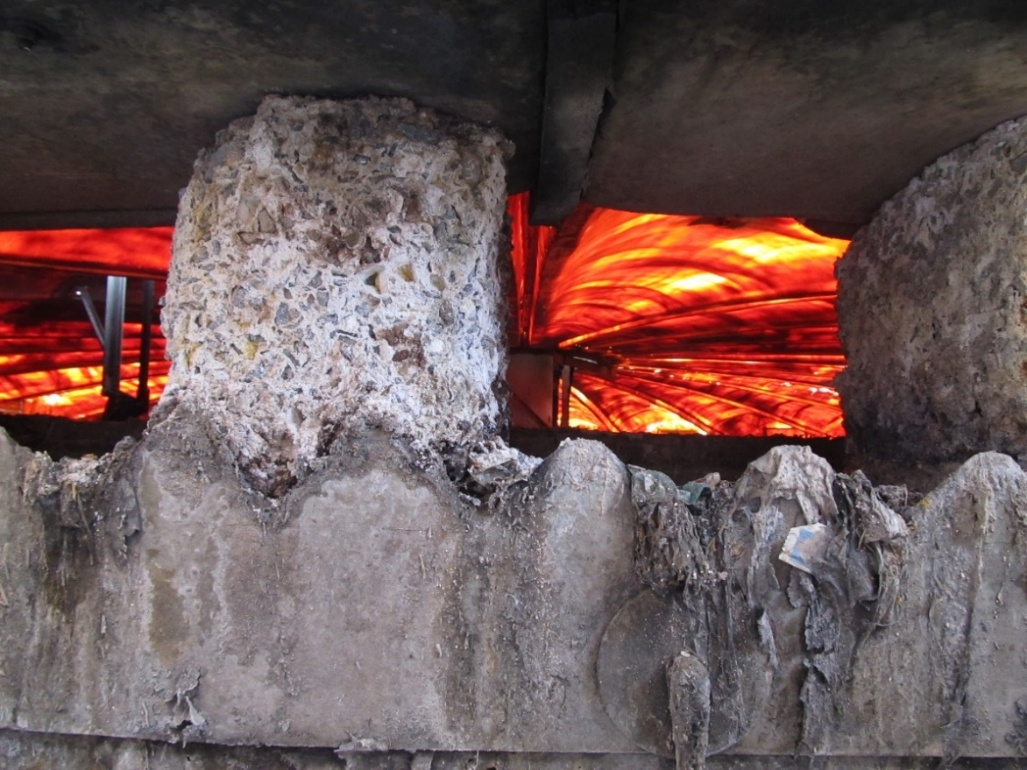
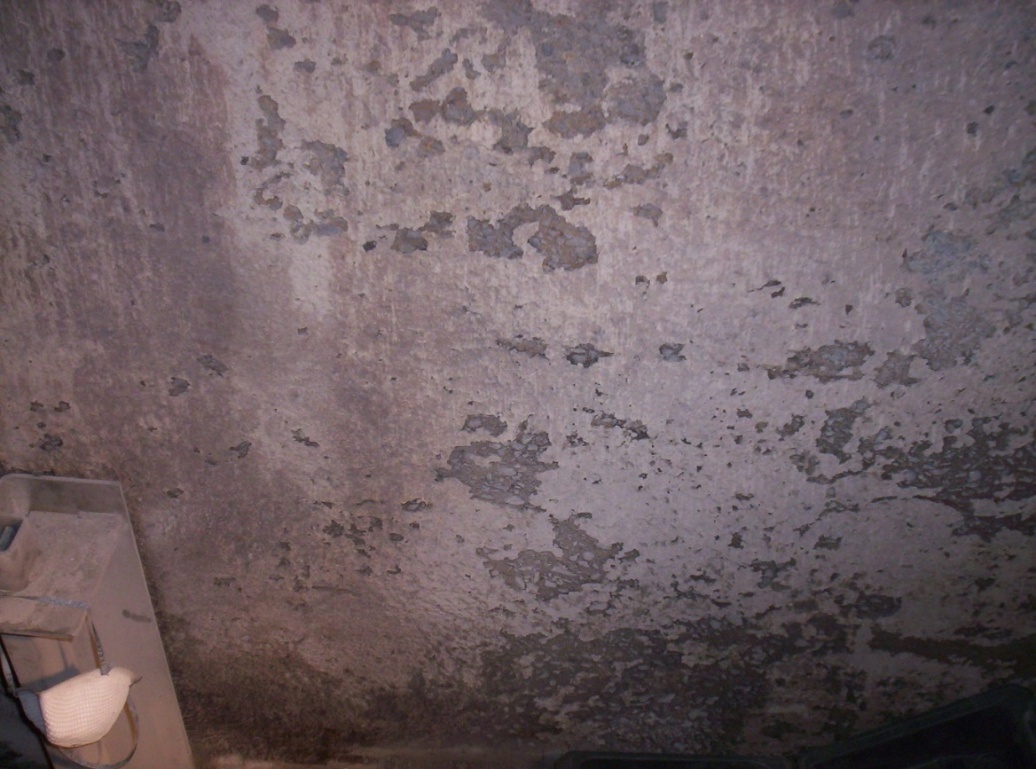
This acidic attack of concrete is commonplace in the headspace of covered grit removal tanks, primary clarifiers, and sludge thickeners. In these applications, the headspace concrete is part of the odor control collection system. Figures 1 and 2 show a classic case of concrete corrosion in the headspace of a covered gravity sludge thickener. Figure 1 shows the thickener with its FRP cover and odor control ductwork. Figure 2 reveals that the main concrete damage has occurred where airflow is minimal. Where foul air is adequately evacuated from the covered thickener, corrosion damage to the concrete is negligible. Dead zones or low airflow regions in such headspaces are typically where concrete degradation is most common. Either enhanced airflow with a greater number of air changes or the use of a robust protective lining for the concrete represent the two best preventative options for this corrosion.
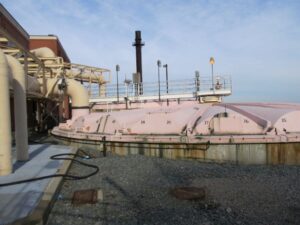
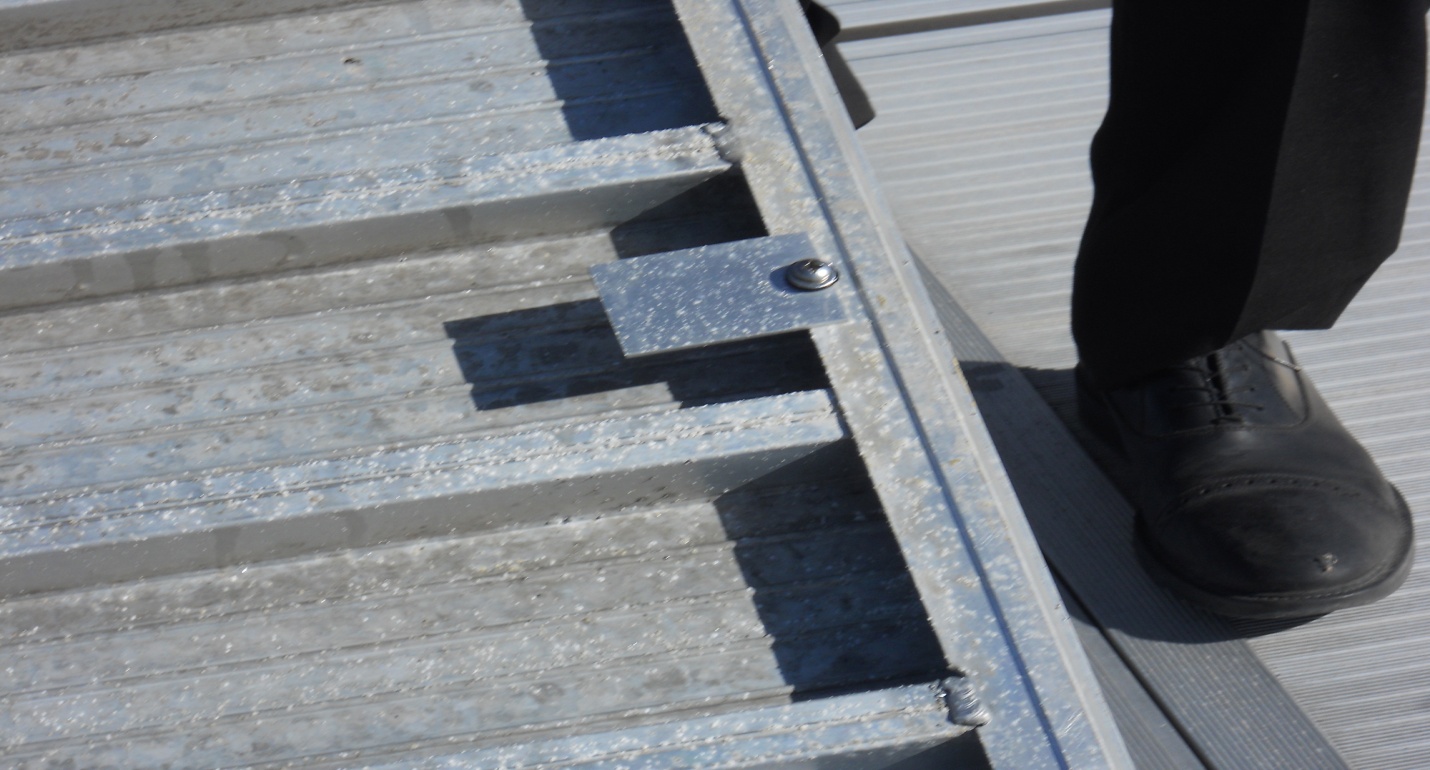
Aluminum alloys have been widely used for tank or clarifier covers, access walkways, bridges, and handrails in primary and secondary clarifier headspaces. Where optimal airflow sweeping and sufficient air changes per hour are provided, aluminum alloys perform very well where foul air is captured and moved on to treatment in scrubbers, biofilters, etc. This is evidenced in the aluminum covers used over the primary clarifiers depicted in Figure 3. After 10 years in service, these 6000 Series aluminum hatch covers show almost no pitting corrosion. The success of the aluminum here is not due to the grade of aluminum selected nor to the fact the alloy components were anodized. Most grades of aluminum corrode at nearly the same rate in low pH conditions. As for anodizing, it does not greatly enhance aluminum corrosion resistance to acidic exposure. Rather, two other factors made this material choice a win. One, there were ample air changes to evacuate foul air. And secondly, there was continued flushing of the underside of the aluminum surfaces by condensation. The combination of good clean airflow into and out of the headspace and continual condensing conditions prevent acidic conditions from breaking down the passive film of the aluminum. Aluminum, like zinc, is an amphoteric metal. In practice, this means it has a range of pH exposure in which it remains passive. For aluminum, this “sweet spot” is somewhere between 4.5 and 8.5. Below or above that pH range provided there is ample electrolyte present, the metal actively corrodes. The pH of the condensate found typically on the underside of the aluminum covers in Figure 3 was measured to be between 6.5 to 6.8.
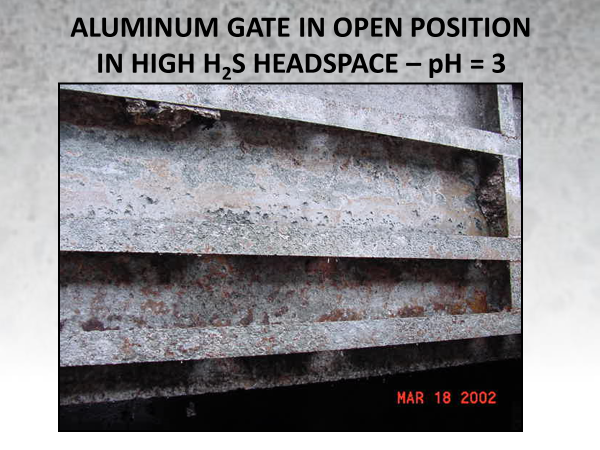
Conversely, aluminum gates and gate frames in covered head works are highly susceptible to corrosion due to biogenic sulfide corrosion where insufficient airflow and foul air removal occurs. These situations are further exacerbated by turbulent wastewater flow conditions that continuously strip H2S out of solution. Figure 4 shows a textbook case of aluminum gate corrosion in a covered headworks facility.
Stainless steels are resistant to corrosion in many environmental exposures because the metal forms a passive oxide film on its surface in the presence of oxygen. When environmental exposure conditions interfere with the formation and/or maintenance of that passive oxide film, stainless steels corrode. The most commonly used stainless steels in wastewater applications are austenitic stainless steels especially Types 304L and 316L. Duplex stainless steel alloys such as 2505 and 2507 are growing in popularity in wastewater uses due to their higher strength, better chloride pitting resistance, and their superior stress corrosion resistance. The 300 Series stainless steels are austenitic, a result of the addition of nickel to their composition. The austenitic phase gives Types 304L and 316L excellent ductility and fracture toughness. Their chromium and nickel content result in good corrosion resistance to low pH exposure. The molybdenum added to austenitic stainless steels imparts localized corrosion resistance. The more molybdenum, the greater the chloride related pitting and crevice corrosion resistance the alloy will provide.
Types 304 and 304L contain no molybdenum and therefore have very poor chloride related localized corrosion resistance. Types 316 and 316L contain 2 to 3% molybdenum. Hence, these alloys have chloride pitting resistance up to about 1,000 mg/l at neutral pH at 90 to 95oF. When selecting stainless steels for odor control system components, one must carefully consider the chloride ion content of the wastewater plus potential concentration effects in the gas phase of exposure. For example, if the influent to a treatment plant has a chloride ion concentration of 800 to 850 mg/l, Type 316L stainless steel will generally perform well immersed in that wastewater. However, if odor control airflow exposures include wet-dry cycles, concentration of the chlorides on the stainless steel surfaces can increase over time, eventually exceeding the pitting resistance of that alloy. Those concentration effects will commonly develop at crevices or rough areas on the stainless steel such as at welds, heat affected zones, or at threaded connections.
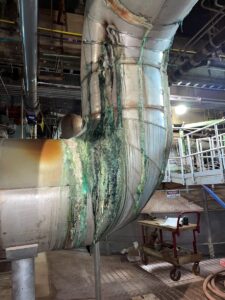
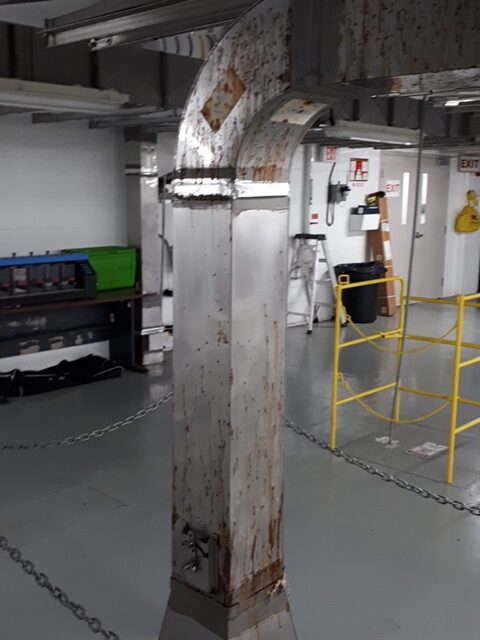
Figure 5 shows pitting corrosion in Type 316L foul air ductwork due to chloride concentration effects. The foul air from the headspace in a coastal treatment plant’s headworks included airborne moisture containing chlorides. Over a period of less than 10 years, chlorides concentrated at welds, weld-heat affected zones, and at flanged connections where pitting corrosion resulted in perforations in the ductwork.
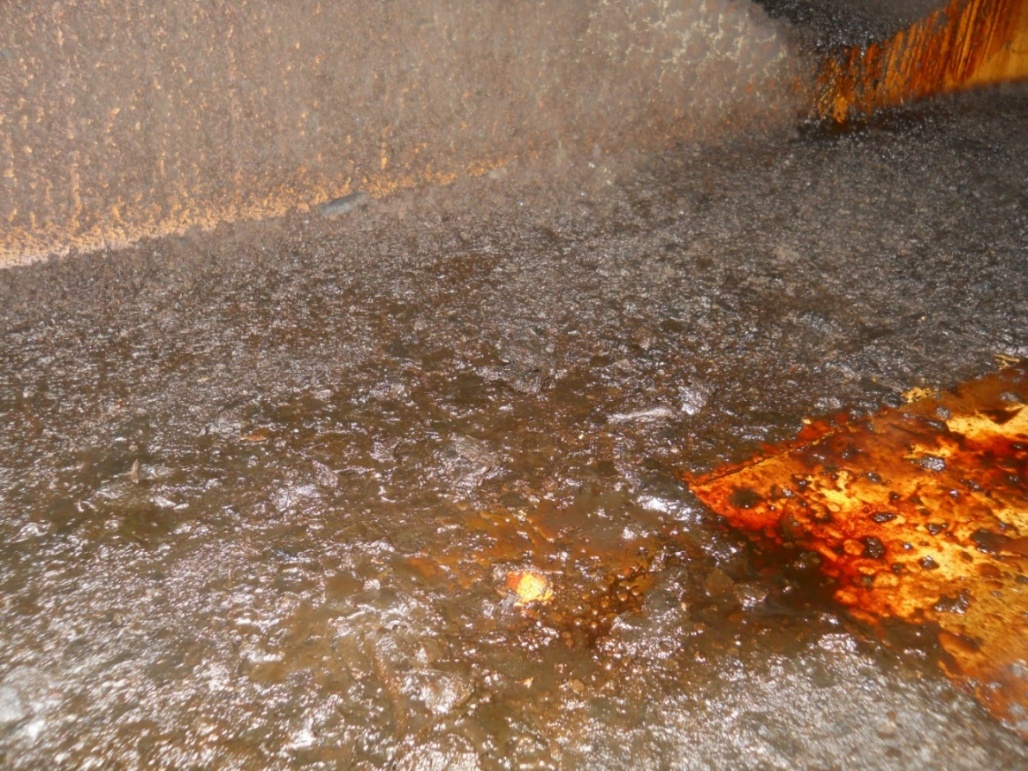
At a large remote headworks facility in New England, abrasion-erosion damage was identified on the interior surfaces of rectangular FRP ductwork. This damage was found during a routine condition assessment inspection. The damage was found to be directional with the airflow in its pattern and was more pronounced at areas where the airflow velocity was greatest and where airflow changed direction. This included areas where ductwork size reduced in the direction of flow and went from round to square in shape. Figure 6 shows this damage to the corrosion barrier on the interior ductwork surfaces. The damage was coincidental with the embedment of small grit particulate in the exposed and damaged FRP laminant. The ductwork where this damage occurred was located downstream of the grit removal equipment for the remote headworks facility. Figure 6 reveals exposed chopped strand mat fibers as well as intact areas of the double veil laminant sequence.
The lesson learned here is that particulate carry-over from grit removal can cause FRP corrosion barrier damage due to abrasion-erosion. Design of odor control systems must take this concern into consideration. The use of baffles to prevent this carry-over of particulate would be one solution to this problem. Proper design of airflow velocity is also important to avert this potential damage mechanism.
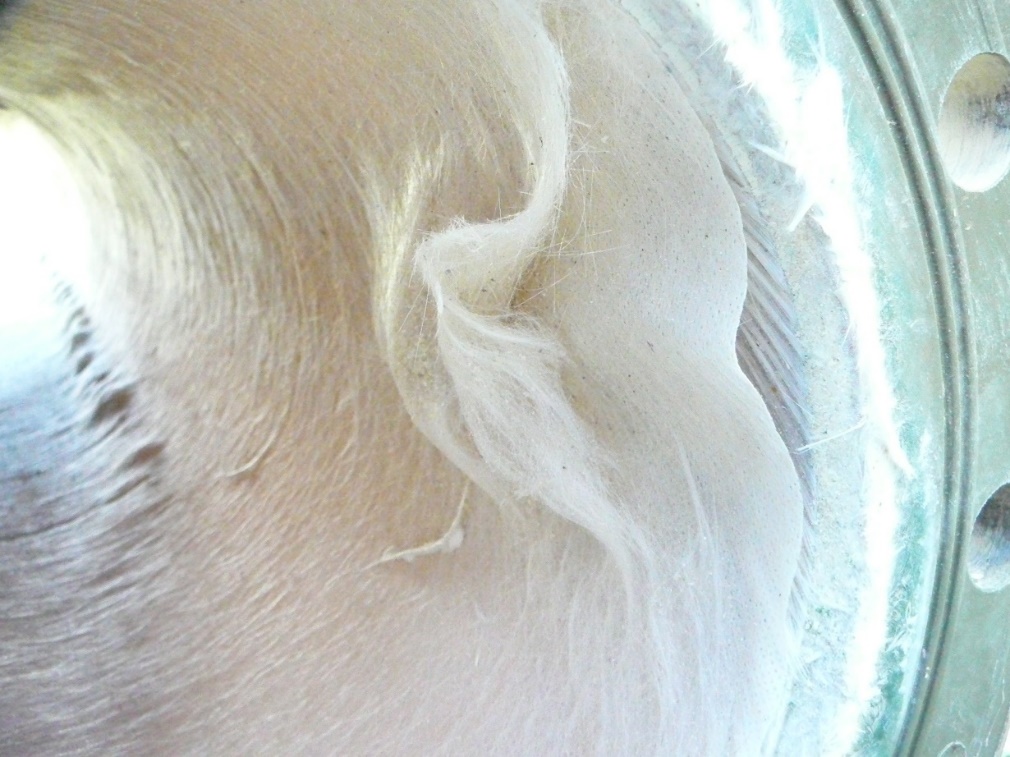
When FRP ductwork for odor control systems is designed, the right resin selection must be made. The most commonly used resin for successful odor control ductwork performance is a brominated bisphenol A epoxy vinyl ester. This resin should be used for the corrosion barrier at a minimum in the laminant sequence. This resin when properly polymerized provides excellent corrosion resistance to H2S, CH4, and CO2, (the common wastewater gases) as well as to sulfuric acid (H2SO4). When resin with inadequate corrosion resistance is used, the resin can be attacked chemically and broken down leaving the corrosion barrier reinforcement loose and no longer engaged in the resin composite. Figure 7 shows a case where a less expensive polyester resin was used by mistake in a portion of ductwork fabricated for odor control in a wastewater treatment plant. As the photo clearly shows, the resin was degraded leaving the veil and chopped strand mat hanging freely. Once the corrosion barrier has been breached and the structural laminant has been contaminated, the repair of FRP ductwork is futile. This ductwork had to be replaced.
Biofilters have been a very successful approach to treating foul air under the right operational circumstances. Various materials such as wood chips, bark, and other organics are used to filter foul air for the removal of hydrogen sulfide and other odorants. Biofilters operate in two steps to remove odorants especially H2S. First, the waste gases are forced through the filter media on which micro-organisms are present and immobilized. The gases are absorbed into the wet media. Once this occurs, the micro-organisms break down the organic compounds into by-products such as carbon dioxide, mineral salts, acids, water, and other microbial cells. This breakdown process is called biodegradation. While many other odorous compounds are removed via biofiltration, the main objective in wastewater is removal of H2S gas. The biofilters for H2S removal must operate at a very low pH because sulfuric acid is the main oxidation product formed by the micro-organisms present. The leachate collected from biofiltration of H2S is therefore very low in pH because it is primarily comprised of water and sulfuric acid. The containment areas for most H2S biofilters are constructed from concrete. And due to the low pH conditions from the acidic leachate, this concrete must be lined with a material sufficiently chemically resistant to the H2SO4.
Figure 8 shows a biofilter containment structure that degraded prematurely because the concrete was not lined with the appropriate coating material. In this case, the concrete was coated with a polyamide epoxy coating. This coating had neither the requisite acid resistance nor was it resistant to bacteria including Thiobacillus. The bacteria actually metabolized various constituents in the polyamide resin. The appropriate lining materials for biofilter basins or structures are certain polyamine cured epoxies, novolac epoxies, vinyl ester coatings, or anchored thermoplastic linings such as PVC or HDPE. The failure of this lining was the result of improper material selection caused by poor design practices.
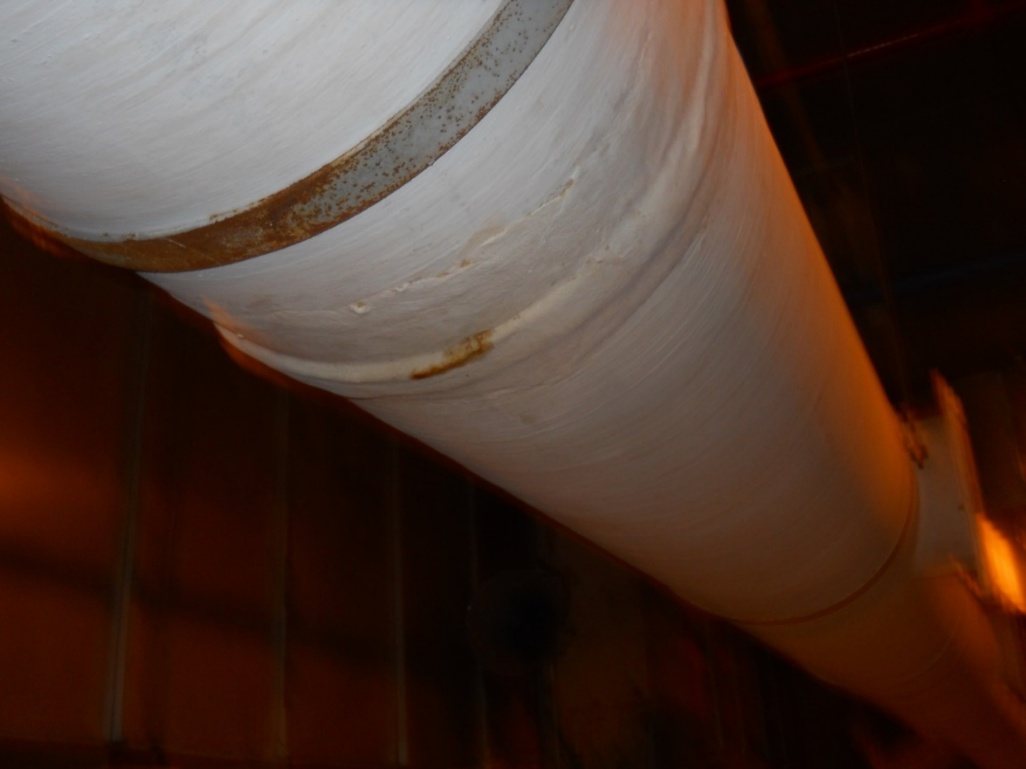
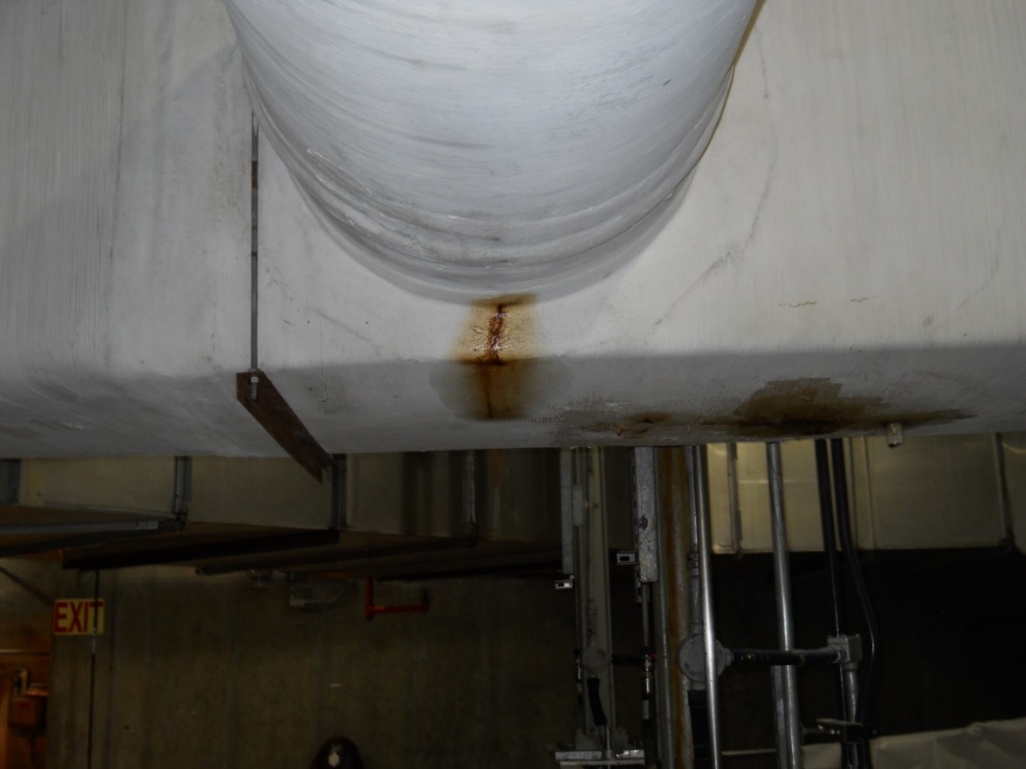
Construction related defects can also cause poor performance of odor control ductwork and equipment. Figures 9 and 10 depict typical construction related defects in FRP odor control ductwork. In these cases, poor joint workmanship resulted in joints which leak. Figure 9 shows leakage at a bell-and-spigot joint in round ductwork. Figure 10 shows leakage of water and wastewater carry-over at a butt joint at a round duct to square duct transition.
Concrete deterioration due to biogenic sulfide corrosion is best prevented with barrier coatings or linings that are resistant to wastewater gas permeation and to dilute sulfuric acid. In new construction, this is successfully accomplished with thermoplastic sheet liners including PVC and HDPE which are anchored into the new concrete. The seams are heat welded. Some retrofit versions of these thermoplastic linings are available, but difficult to construct in many instances.
For most existing headspaces, concrete protection from biogenic sulfide corrosion is best accomplished using blended amine cured epoxy linings, some aromatic polyurethane linings, and to a lesser extent with vinyl ester-based linings. These systems are liquid applied over cementitious or waterborne epoxy cementitious filler/surfers which are float or trowel finished to fill air voids (also called bugholes) prior to coating application. These linings perform very well when good adhesion and pinhole free film quality is assured.
Aluminum alloys must be used prudently in odor control systems. As dome type covers for clarifiers and sludge thickeners, aluminum covers perform very well when ample ventilation is provided (10 to 12 air changes per hour). Aluminum alloys should not be used for foul air ductwork when H2S gas concentrations can be higher than 5 to 7 parts per million routinely. The formation of dilute sulfuric acid on aluminum surfaces almost invariably results in high corrosion rates. Flat aluminum covers have been successful on primary clarifiers as shown in Figure 3 where high air sweeping occurs and where constant condensing conditions are present. Otherwise, acidic condensate at a pH below 4.5 will be likely along with loss of the aluminum’s passive film.
When selecting stainless steel alloys for use in odor control, one must carefully consider the chloride ion concentration in the bulk wastewater as well as the probability of chloride concentration effects in the gas phase as described above. Types 304L and 316L both perform well in acidic odor control environments where sulfuric acid concentrations are likely to be under 10%. However, there are critical chloride concentrations which promote localized pitting and crevice corrosion in various stainless steels. The lower the condensate pH and the higher the temperature in a given headspace environ, the lower that chloride pitting concentration will be. As a general rule, Types 304L and 316L stainless steels begin to pit and crevice corrode when chloride concentrations are near 300 mg/L and 1000 mg/L respectively. Odor control airflow conditions tend to promote chloride concentration effects. Therefore, if chloride levels in the liquid wastewater are even reasonably high (150 to 200 mg/L), the selection of stainless steel in odor control ductwork and equipment should err on the side of caution. In these conditions, this author’s experience suggests that Duplex Type 2205 stainless steel is a better choice than Type 316L for equipment components. Further, properly designed and constructed FRP is a better and more cost-effective material for ductwork under those same exposure conditions.
Proper resin selection is crucial to FRP odor control equipment performance as demonstrated in Figure 7 above. Of equal importance are good fabrication and joining practices for FRP ductwork and equipment. This was evidenced in the examples of leaking joints shown in Figures 9 and 10 herein. Fortunately for the wastewater industry, there is the Fiberglass Reinforced Plastics Institute or FRPI. FRPI provides FRP laminant qualifications, specifications including proper resin selection, proper fabrication quality practices, and condition assessment guidance and Q.C. inspection training. FRPI has filled a long and sorely needed source of knowledge and best practices for FRP used in odor control and chemical storage tank equipment in wastewater applications.
Other viable corrosion mitigation practices in odor control systems include proper ventilation design and the use of chemical treatment in odor control. These subjects are well documented in Chapter 6 of Manual of Practice 8, Sixth Edition, published by WEF.
In summary, various corrosion damage mechanisms degrade the metal and non-metal materials used to construct or be integral to odor control systems. A sound understanding of those damage mechanisms by specific materials of construction and best material choices for corrosion resistance can help designers avoid premature failures in odor control systems. Sound guidance information is available through WEF, the FRPI, and corrosion and materials engineers and consultants. More information on Materials of Construction and Corrosion Control is available in Chapter 10 of Manual of Practice 8, Sixth Edition, Design of Water Resource Recovery Facilities, published by WEF.