One-person, or firm, cannot be the best at everything. Many owners and engineering firms struggle to find the perfect combination of skilled and experienced staff to meet their needs in today’s changing world. The retirement of older engineers creates a challenging experience void. Education is crucial, but alone won’t solve engineering problems. Experience gained from years of toiling in a particular field, suffering the pain and expense of past mistakes, and learning from those mistakes are vital elements to problem solving. There are many bright and promising new engineers whose enthusiasm and dedication to their disciplines is admirable. These grapes are destined to become a signature vintage wine with time and fermentation. However, there is no way to expedite or accelerate experience gain. Education, field experience, and problem-solving combine to create experts in any discipline. We need to be patient with the next generation. Much of the education process is important, yet more general in nature. Engineering problems are not always general.
There are inherent risks to firms when inexperience meets nuanced problems. If not managed properly, these risks can turn into financial liabilities and undermine confidence in both the individual and the firm. There’s no shame in acknowledging a lack of knowledge regarding difficult challenges. There is definitely a risk in not admitting it.
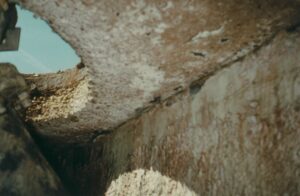
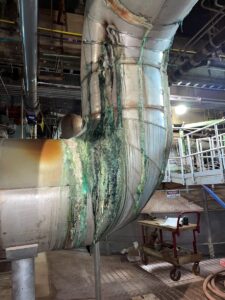
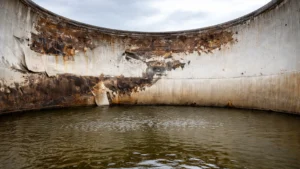
Unfortunately, material failures occur relatively routinely. Failures often occur when the engineering firm performing design lacks understanding of the structure, substrate, or environment/processes. As a result, they provide insufficient specifications that lead to costly failures. Most of these failures are completely avoidable.
Many issues require specific skills and experience to have a full understanding of the issues and potential solutions. For example, when working with concrete substrates, it is critical to fully understand the corrosion mechanisms at play, and any other underlying issues to provide effective solutions. To work in concrete assessment, you need skills in concrete placement, curing, identifying deterioration causes, understanding corrosion mechanisms, and implementing testing protocols for practical solutions. Another example is stainless steel. Choosing the incorrect grade of stainless steel for a project has historically resulted in numerous premature failures. The variances in corrosion resistance between stainless steel grades, depending on the environment and exposure, is a science unto itself. The specifier always has the option to select a top-grade stainless steel; however, that approach could be impractical and excessively expensive, probably surpassing the project’s budget, and may still not be the correct choice. A complete understanding of the end-use conditions including performance needs not related to corrosion and knowledge of various stainless-steel grades and their properties and possible shortcomings are necessary to determine what alloys will be effective. A final example would be the need to fully understand all the necessary details when selecting and specifying protective coatings and linings. These details include potential exposures (chemical/environmental), corrosion resistance potential, application parameters, life cycle expectations/potential, substrate suitability, etc. Given their many project responsibilities, design engineers cannot reasonably stay updated on coating and lining advancements. Incorrectly addressing coating and lining requirements can have disastrous consequences. The main elements driving protective coatings and linings advancements include evolving volatile organic compound (VOC) regulations; the desire to reduce labor costs and provide faster return-to-service options; and the need to provide the highest level of corrosion protection to maximize life-cycle potential. Understanding all the various protective coating and lining options and determining where to use them can be complex. Engineering students receive little to no education on protective coatings and linings. When environmental and engineering controls alone cannot be manipulated to decrease the level of corrosion, companies rely on protective coatings and linings as the last line of defense against corrosion. Engineers can access free information on coatings and linings from manufacturers, but it’s worth considering that a manufacturer’s suggestion may not always be the optimal choice. In other words, they may honestly offer their best product to solve a problem, it just may not be the best product for the task. These examples, along with a range of other issues, are part of the daily challenges in any project. Not all design engineering firms have the expertise to manage these challenges. When this is the case, the best way for such firms to manage the risk of getting it wrong is to engage outside help from proven experts.
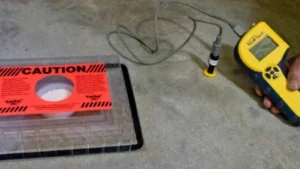
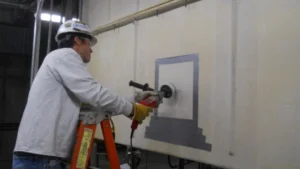
Experience is crucial when assessing structures that need rehabilitation. Before preparing project specifications, it is important to assess all substrates. Without a comprehensive assessment, it is impossible to determine the rehabilitation needs. For example, a condition assessment of concrete surfaces subjected to wastewater immersion or other chemical or biological exposure, reveal the depth of deterioration and contamination by sulfates, nitrates, chlorides, etc. Understanding the level and depth of deterioration and contamination is the only way to know what is required to rehabilitate the surface. Unless properly measured and assessed, costly mistakes are not only possible, they are highly probable. This process can require concrete powder testing, pH gradient testing, and/or core samples analyzed through petrographic analysis. Samples taken from a site require a thorough assessment by an experienced laboratory. Failing to grasp the full effects of deterioration on the concrete can lead to either premature failure of the rehabilitated structure or suboptimal performance of the installed repair products. Various factors must be understood when assessing metallic surfaces like carbon steel, aluminum, stainless steel, or galvanized steel in order to prepare a proper rehabilitation specification. To create effective specifications, one must evaluate the level of corrosives, the condition of the metal (such as pitting or general section loss), and the current rust/corrosion extent when assessing metallic surfaces. This is true for every kind of metallic surface. Only those fully knowledgeable about damage mechanisms and their long-term surface effects can perform thorough condition assessments. Failure to get a full understanding can lead to catastrophic material failures.
The answer to the inexperience issue is for design engineering firms to search out and use verifiable industry experts in the various specialty fields of engineering. Most design engineering firms do not focus on only one industry, they are multifaceted firms who work in varying markets. It rarely makes sense for such firms to have in-house experts/specialists in disciplines where they may not have enough work to keep the expert productive. Relative to corrosion prevention, it might not be logical to employ specialists in cathodic protection, protective coatings, or metallurgy/materials science since these needs can be sporadic and depend on project workload. Acquiring these specialized services from an independent, specialized consulting firm makes the most sense, and the fees for this work can be recouped on the project without paying extra for staff benefits and wages. Engaging experienced and professional independent consulting firms to be a part of your engineering project team not only ensures you have a better chance of catching any nuanced issues, in the long run your younger engineers will learn from the more experienced specialists, thus allowing the knowledge to grow organically while managing the risk for your firm.
Many firms prefer to do most of the work internally to save money and increase profits, while still trying to serve their clients well. Enforcing this “in house” utilization in too ridged a manner can bring undue risk to the firm and taint the firm’s reputation if problems or failures occur.
Ignorance is never a good defense; it does not play out well in legal cases. Corrosion Probe, Inc. (CPI), the firm that employees this author, and other similar consulting firms, specialize in concrete, metallurgy, cathodic protection, coatings and linings, materials selection, specification writing, and failure analysis in multiple market segments such as municipal water & wastewater infrastructure, bridge and highway, pulp and paper, oil & gas, etc. CPI and other firms are like the “Special Forces” of the engineering world. These companies not only actively seek out and employ individuals who possess exceptional skills in particular areas, but also provide opportunities for them to concentrate on their specific strengths and interests, resulting in a heightened proficiency in their core disciplines. Bringing in these specialists, when necessary, will boost a design engineering team’s effectiveness and guarantee more efficient and accurate outcomes. The client will be left with a strong sense of representation and confidence in the outcome.
Being the best or elite at everything is impossible for any individual or company. If you feel your firm is the exception to that rule, more power to you. If not, seek the correct specialists and form a partnership that will indeed reap rewards for all parties involved.