Too often, coating failure analysts ignore the evidence in front of them and obsess with hi-tech analytical analysis simply because it is available to them, or perhaps because that is was they themselves are in the business of doing. This tendency to rely on hi-tech test data to find a conclusion that supports a biased point of view is the wrong way to approach failure analyses, but it can impress and even dazzle. Frequently, this overuse of analytical methods complicates logical and accurate failure analysis work. This paper discusses a classic example where the facts surrounding the failure of a lining system were ignored and undue reliance was placed on laboratory analysis. This “blind faith” in analytical data without a sound causal theory caused the failure analysts to disregard or overlook the obvious.
Keywords: isocyanate, polyol, polyurethane, carbon dioxide, hydrolysis
Over the past few years, the authors of this paper have been involved in several coating failure analysis projects in which our final assessment was at complete odds with the findings of other analysts. It is not uncommon to disagree on details. There is almost always some uncertainty. But profound differences of opinion should be uncommon when everyone is reviewing the same evidence. In one particular case, it was our conclusion that the mode of lining system failure as well as all circumstantial evidence in project documentation clearly supported one failure mechanism. Yet other analysts believed that the causes of the failure were probably several and in one aspect, something completely new that no one seemed to have heard of before. These analysts put forth their theory as to one of the primary causes of failure, freely admitting that they could find nothing in an extensive literature search to support their opinion. We simply could not comprehend how they reached their conclusions. There was too much focus on chemical analysis, seemingly without purpose other than to simply get data. In addition, the facts were obscured and seemingly driven more by what their client wanted to hear rather than what the evidence really indicated. This paper reviews that case history and illustrates how not to conduct an independent, third party, coating failure analysis.
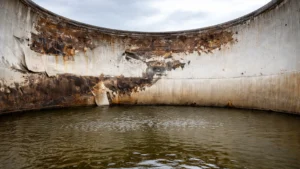
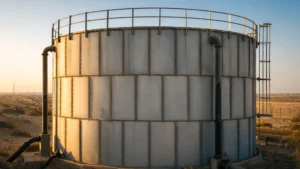
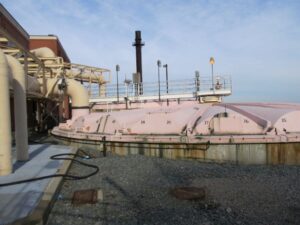
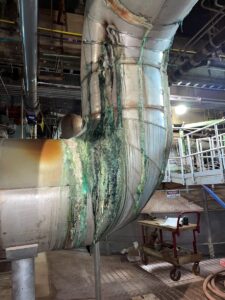
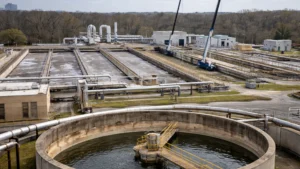
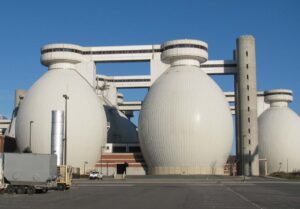
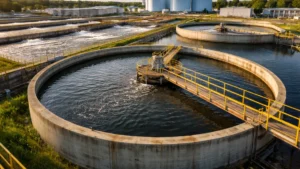
In February of 2006, we were retained to investigate the cause of the delamination failure of a flexible PVC sheet lining in three anaerobic digesters and a Digested Sludge Storage Tank (DSST) at a large wastewater treatment plant. The lining system consisted of a thin, modified epoxy primer applied directly to concrete followed by a 120 mil (3mm) thick layer of a sprayapplied, polyurethane mastic coating with a 30 mil (0.76 mm) thick layer of PVC sheet adhered to the urethane layer via a proprietary chemical surface activator.
The liners were installed between 1997 and 1998 as part of a secondary treatment plant upgrade project. The vessels were placed in service in early 2000. After approximately 18 months in service, the liners had failed in Tanks #1 and #2. The liners in Tank #3 and the DSST failed subsequently. The mode of failure was loss of adhesion between the PVC sheet and the urethane and also between the urethane and the epoxy primer on the concrete. Prior to our investigation, another failure analysis outfit (referred to hereafter as ACME Labs) conducted an independent failure investigation. They represented the facility owner. We were retained by the design engineer. This paper will carefully examine the two independent failure analyses.
Here is what the evidence showed:
After visual examination of coating samples, ACME labs did seemingly all they could. They performed a wide variety of hi-tech analytical techniques including elemental analysis, scanning electron microscopy (SEM), energy-dispersive X-ray (EDX) spectroscopy, thermal analysis, and Fourier transform infra-red spectroscopy (FTIR).
Inspection showed the surface preparation of the concrete was adequate in terms of degree of cleanliness and roughness. Chemical analysis of the condensate collected in the tanks confirmed that the wastewater condensate contained no contaminants that would be expected to be harmful to the liner system except the water. Chemical analysis of the polyurethane mastic material confirmed that the two components were well mixed and in the correct ratio when applied. Degradation of the polyurethane mastic material was initiated from the epoxy primed concrete and progressed outward from there. The PVC sheet cover for the lining system behaved as an effective diffusion barrier against the substances that promoted degradation of the urethane coating. Therefore, water was thought to be permeating from below, through the concrete into the urethane coating.
Laboratory analysis of the urethane coating samples suggested that the degradation of the urethane coating occurred by reversion to low molecular weight compounds. This was explained as a post-cure hydrolysis reaction caused by exposure to temperature and moisture. The increasing porosity of the polyurethane mastic material allowed for increased water absorption which increased the mechanical load (the weight) that the liner could support. The increased weight and reduced properties of the urethane coating caused adhesive and cohesive failure of the lining from the epoxy primed concrete substrate. The deterioration mechanism was said to be accelerated by the elevated operating temperature of the tanks (550C or 1310F) and moisture permeating into the urethane coating from the concrete roofs and walls of the tanks.
The ACME Labs report raised the possibility that “moisture present in the substrate at the time of application of the urethane may have inhibited the curing reaction, resulting in undercure, an excess of polyols, bubbling due to carbon dioxide generation, poor film integrity and low adhesion.” This reference was taken from the Handbook of Polymer Degradation by S. H. Hamid, M.B. Amin, and A.G. Maada, page 515. The report went on to rule this out because “this would have been detected during inspection and created difficulties during the subsequent installation of the PVC sheet. There are no indications that these symptoms existed during the liner application.”
ACME Labs reported that they had conducted an extensive literature search in an attempt to support their post-cure hydrolysis conclusion with references. They admitted in their report that they could not find any such references. They must have been on to something new.
The primary cause of failure was most likely a chemical reaction of the isocyanate component of the polyurethane mastic material with water during coating application. The isocyanate component of the polyurethane mastic material is reactive with water. The reaction with water allows polymerization but it produces a urea linkage in the polymer instead of a urethane linkage. More importantly, carbon dioxide gas is kicked-out as a by-product. That changes the physical properties of the material during solidification from the liquid. One milliliter of water may react with isocyanate to form more than one liter of carbon dioxide gas under typical conditions, and so a little water can cause a lot of gassing. The chemistry is well understood. We have seen this gassing problem many times and one can find ready reference to it in the coatings literature.
Moisture during application was a known threat for gassing on this particular project. The inspection records indicated that gassing was evident during and soon after installation of the polyurethane mastic. The source of the moisture was most likely condensation on the epoxy primer but there was also the possibility of moisture having been present in the polyol component of the coating. The polyol resin component of the polyurethane mastic is hygroscopic. It will readily absorb moisture from relative humidity. The inspection records documented ponded water on containers. The polyol resin component can absorb and hold a significant amount of water with no discernible impact on the properties (e.g., viscosity, consistency) of the polyol component. It simply holds the water until the two components of the polyurethane are mixed together, at which time the water molecules may find and react with the isocyanate component to form carbon dioxide gas.
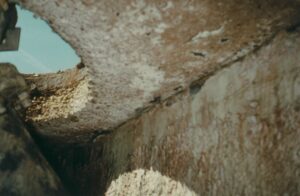
We quickly came to the conclusion that water during coating application was the root problem because the review of project documents including photographs, and examination of coating samples, were all consistent with a common and well understood problem. There was no need for further study. Application of the polyurethane over condensed moisture on a surface provides for gassing at that surface, in this case the interface between the epoxy primer and the polyurethane. Some of the carbon dioxide gas may move as bubbles and escape through the polyurethane to the atmosphere while the material is still sufficiently liquid. In some cases, pinholes will be left in the top surface. In that case the carbon dioxide gas managed to escape but the coating was no longer sufficiently liquid to be self-healing. Some gas bubbles will never make it to the surface. The coating solidifies fairly quickly and gas bubbles get locked in to produce internal voids as with Swiss cheese. Most importantly, when water of condensation is present on the substrate that is where the gassing initiates.
That is how the expert opinions diverged from the same evidence. The physical evidence seemed obvious to us. The reaction of isocyanates and water gives off carbon dioxide gas as a by-product. The inspection records noted gassing during and soon after coating application. Application of the polyurethane over condensed moisture on a surface provides a foaming in the polyurethane at that surface. That is expected to minimize physical contact of the polyurethane to the epoxy primer. Adhesion is compromised from the get-go. It was a built-in condition as the polyurethane material was solidifying. Once the polyurethane is cured and solid, the isocyante is no longer present. It has been reacted to make polymer.
ACME Labs seemingly ignored the inspection records that noted gassing during liner installation. They took up an initial position that the polyurethane mastic material had been properly applied and cured and that it was initially in full contact with and had good adhesion to the epoxy primer. They argued from that position that later on, while in service, the polyurethane material was chemically degraded by a chemical reaction with water. That chemical reaction resulted in the foaming and observed porosity, originating from the substrate and extending up into the bulk thickness of the polyurethane.
That chemical reaction was referred to as a post-cure hydrolysis. It was not explained in any detail. The term “post-cure” was used as a reminder that the material was properly cured and then chemically attacked at some later time. Hydrolysis is a broad term that refers to a reaction with water. Many organic polymers contain linkages that are susceptible to hydrolysis. The most familiar example to the coating industry is saponification, an alkaline catalyzed hydrolysis of ester linkages found in oil and alkyd based paints. Acid catalyzed hydrolysis reactions are also possible. Some polymers can be attacked by water at pH 7, if the water is hot enough. In any case, the problem is chain scission. Large polymer molecules are literally chopped to little bits. ACME Labs argued that their analysis suggested that the degradation of the urethane coating occurred by reversion to low molecular weight compounds. They may or may not have actually found any evidence for that (to be discussed later on) but hydrolysis of the solid material would occur as fairly uniform surface attack. The low molecular weight compounds would be liquids, primarily carboxylic acids. Whether or not they had any good evidence for the expected low molecular weight compounds was debatable. But more importantly, their post-cure hydrolysis theory could not explain the observed morphology. The solid polyurethane material could not be chemically attacked in this manner and be made to foam.
Whenever there are dueling narratives, competent attorneys don’t want to believe; they want to be convinced. To affirm our opinions regarding the cause of the liner failures, laboratory mockups of the lining products were conducted. The purpose of the mock-ups were as follows:
(1) It would be helpful to demonstrate that when properly cured, the urethane material would not be degraded by immersion in water at 550C (1310F). We are aware that urethane chemistries do not offer the best hot water resistance but we reasoned that the process temperature was much to low to be a concern. And we knew beyond any doubt that hot water immersions would not cause foaming of the properly cured polyurethane mastic.
(2) It would be helpful to demonstrate that exposure to moisture during the cure phase of the polyurethane mastic would produce carbon dioxide gas and as a result foam the material.
For the hot water immersion, wet samples of the urethane mastic material were prepared by strictly following the manufacturer’s application instructions. These samples were applied at approximately 120 mils thick over polyethylene plastic. The samples were cured at 720F (220C) and 50% relative humidity for 7 days. Then the samples were immersed in water kept between 130 and 1350F for 72 hours. Physical probing and visual examination of the samples before and following this exposure revealed no change in the material. There was no noticeable color change, no softening or cracking, and most notably no foaming reaction. There was no indication of any effect on the material.
For the moisture during cure demonstration, the following mock-up was performed:
Concrete masonry block that was at least 6 months old was soaked in potable water for 48 hours. The concrete sample was removed from the water and allowed to air dry for 4 hours. Next the top and side surfaces were blown dry using a hair dryer. The concrete was primed with thin epoxy primer in strict accordance with manufacturer’s application instructions. The bottom of the block was not coated. Following proper recoat time for the primer, the polyurethane material was applied at an approximate thickness of 120 mils over the top and side block surfaces. The sample block was left on the lab bench overnight. The conditions in the room were approximately 72-740F (22-230C) and 50% relative humidity.
The following morning, the urethane coating was seen to have foamed and expanded. This foaming was obviously caused by the reaction between the substrate moisture and the isocyanate component of the polyurethane mastic. This reaction produced carbon dioxide gas, some of which did not completely escape the material as it solidified. These test applications looked very much like the coating samples from the tanks, especially when viewed on crosssection. Our lab mock-up samples also appeared identical to the photographs of the foamed material presented in the ACME Labs report.
A brief discussion of polyurethane chemistry is appropriate. Polyurethane coatings are the reaction products of lower molecular weight isocyanates and polyols. These reactive ingredients are packaged separately and mixed together to start the chemical reaction and conversion to solid. Most isocyanates are difunctional. Most polyols have at least 3 pendant hydroxyls (-OH) as the functional groups. If the isocyanate and polyol are both difunctional, one ends up with a linear polymer chain (fiber). The higher functionality, most always with the polyol, is required to provide a three dimensional plastic network. The reaction between an isocyanate group and a hydroxyl group is a condensation reaction. The two molecules join together to form a larger molecule without generating a by-product.
Of the two components, it is the isocyanates that are considered “reactive.” Isocyanates will react with chemicals that contain active hydrogens. This includes amines (R-NH2 ), amides (R-CONH2 ), carboxylic acids (-COOH) and water molecules in addition to polyols. Water molecules (H2O) are small, more mobile and more reactive toward isocyanate than the hydroxyl groups (R-OH) on polyol resins. If water is present, water molecules have a good chance of outcompeting the polyol for access to and reaction with, the isocyanate. The reaction of isocyanate and water is a two step chemical reaction that results in a polyurea linkage in the polymer backbone with carbon dioxide gas kicked out as a volatile by-product. Under typical ambient conditions, one gram or one milliliter of water reacts with isocyanate to generate more than one liter of carbon dioxide gas. The volumetric expansion is more than a thousand-fold. A tiny amount of water may provide a lot of gas.
Polyurethane foam products are typically made by using an appropriate, small amount of carboxylic acid and/or water in the mix to generate carbon dioxide gas as a blowing agent. The reaction is quick; it happens as the material is solidifying. Water is very reactive with isocyanates. Moisture-cured urethane coatings use the moisture provided by relative humidity for curing. Moisture condensation on the surface of the coating is not required. These coatings are solvent-based and applied in thin coats of only a few mils dry film thickness. A thin film, kept suitably wet and fluid by solvent, allows the carbon dioxide gas by-product of the curing reaction to escape without leaving pinholes and voids.
Coatings and adhesives that are formulated for a proper balance of isocyanate and polyol have that balance upset by moisture contamination. Any foaming resulting from carbon dioxide gas generation destroys film continuity and strength. If the water is from the substrate, the foaming begins at the substrate-coating interface. Gas bubbles will move up through the thickness of the applied material so porosity is expected to get locked-in throughout but, the gassing reaction at the substrate reduces the area of physical contact between the coating and substrate, and so adhesion is compromised. The chemical nature and structure of the resulting polymer are different than intended. The cross-link density is lowered. The polyol is multifunctional but, water is essentially mono-functional. Water eliminates the isocyanate component, and so there are leftover, unreacted hydroxyls on the polyol. This can have a plasticizing effect and decrease water resistance. There are a higher number of urea linkages compared to urethane linkages built-into the polymer backbone. The reaction of the isocyanate with water is relatively quick and gassing is the obvious symptom, but the final cured polymer matrix is significantly different than intended.
The sources of moisture can be many. The usual concern is water in the application environment, RH, dew point, moisture content in concrete substrate, etc. But the source of moisture here seemed to be the substrate. And surface dry concrete does not mean that excess moisture cannot be present within the capillary of the substrate.
The isocyanate component is reactive with water but it is hydrophobic; it does not mix well with water. The polyol resin component is not reactive with water but it is hydrophilic and will readily absorb and incorporate water. If water gets into the polyol component there is no obvious evidence of the problem until it is mixed with the isocyanate and one experiences the gassing. Special care is taken during manufacture and packaging to keep the polyol resin component dry (e.g., zeolites, nitrogen gas blanketing). The polyol can easily be contaminated with water on site. And again, a tiny amount of water can result in a large volume of gas when the water finds the isocyanate.
If the polyol resin component is contaminated with water, the water is expected to be fairly uniformly distributed. The resulting gassing is expected to be reasonably uniform in distribution with small bubbles. Most of the photos showed splotches of bubbles, some quite large – several inches in diameter. That implicated the concrete substrate as the principal moisture source.
All of the evidence supported the conclusion that the liner failures were related to substrate moisture reacting with the polyurethane resulting in gas formation and foaming. This was clearly a liner installation not a service environment exposure problem. While moisture testing was performed during the liner installation, the inspection reports show that it was infrequent and generally performed prior to primer rather than mastic application. And the cure time for the mastic is relatively long allowing time to elapse between PVC sheet application and the occurrence of the foaming reaction. Insufficient testing was performed to protect the polyurethane mastic from moisture exposure from the concrete substrate.
The ACME Labs report relied on a variety of hi-tech analytical techniques such as elemental analysis (for C, H, N and O), electron microscopy, energy-dispersive X-ray (EDX) spectroscopy, thermal analysis, and Fourier Transform Infra-red Spectroscopy (FTIR). Their conclusion was that the urethane coating degraded in service by a post-cure hydrolysis, a chemical degradation of properly applied and cured polyurethane coating which resulted in a
reversion to low molecular weight compounds. Of all of the tests that were run and reported, the only test that could possibly support that conclusion was the thermal analysis and that involved some significant interpretation (guessing).
Thermal analysis of urethane from Tank #2 (roof) indicated a dramatic reduction in sample thickness at approximately 1590C. The foam structure collapsed. It was reasoned that the collapse may have been due to evolution of entrained moisture, carbon dioxide, polyols, or other low molecular weight compounds. This was clearly guesswork. The reported temperature was 1590C (318.20F). Water boils at 1000C (2120F) and should have been mostly long gone at that point in the test. Some water might have remained in the solid at this temperature but, sudden departure from the coating would not be expected nor would it be expected to result in a dramatic collapse of the foam structure. Similarly, any carbon dioxide would have easily diffused away. The bubbles are not under high pressure. Any gas contained therein is at atmospheric pressure. The polyol does not likely have sufficient vapor pressure to evaporate at this test temperature, let alone, evaporate suddenly. In sum, there was no direct evidence that the sudden collapse of the foam was due to the release of low molecular weight materials. It was simply guesswork.
Thermal analysis of mastic from behind one layer of PVC at one of the tank hatches indicated thermal instability. ACME Labs noted that this might indicate under-cured material but, it was said to be more likely that properly cured material reverted to lower molecular weight compounds. The possibility of under-cure was reportedly not indicated in their FTIR analysis, and so it was believed that the thermal instability must have been due to a post-curing hydrolysis.
There was no direct evidence for the presence of any specific low molecular weight materials to support the post-curing hydrolysis theory. The possibility that the thermal instability signaled a cure problem was disregarded because the FTIR results supposedly didn’t support it. In fact, their FTIR results were fully consistent with improper cure due to moisture contamination, if only they had known what to look for.
FTIR analysis of the urethane from Tank #2 (roof) showed an increased absorption at about 3300 wavenumbers, which looks like polyol. But this was reported as being consistent with increased hydrolysis or under-cure and they concluded that it must be hydrolysis because the isocyanate peak at about 2240 wavenumbers was absent. ACME Labs’ underlying premise here was that their elemental analysis (for C, H, N and O) indicated proper mix ratio and cure. Such elemental analysis of course, could never provide a useful indication of mix ration and extent of cure. Elemental analysis is the wrong tool for that kind of assessment. FTIR would have been infinitely more appropriate for that purpose. One simply takes the 2 components of the coating and purposefully proportions them at different ratios prior to a thorough mixing and cure time. Then one obtains the IR spectra of each of those lab standards for direct comparison with material taken from the tanks. IR provides information about which functional groups are present and in what relative amounts. It’s the functional groups that one should be most interested in. Specifically, does one see lots of leftover hydroxyl groups from unreacted polyol?
Believing that their elemental analysis was an appropriate technique for assessing mix ratio and extent of cure, and that it clearly indicated proper mix ratio and cure, provided a misguided perspective. Seeing an increased absorption at 3300 wavenumbers in the various IR spectra could have suggested leftover, unreacted polyol, but they believed differently. What they focused on in the IR spectra instead was no indication of any leftover, unreacted isocyanate. Believing proper mix and cure coupled with seeing no leftover isocyanate seemed to fit together. The material was properly proportioned, mixed, and cured. The absorption at 3300 wavenumbers wasn’t due to unreacted polyol resin. It must have been due to something else.
The increased absorption at 3300 wavenumbers was a clear indication of leftover, unreacted hydroxyl groups on the polyol resin component. The reason that there was no indication of residual isocyanate in the FTIR analysis is because isocyanates are extremely reactive. It is the isocyanate component of the polyurethane mastic material that reacts with water. Assuming the two components of the material are properly proportioned and thoroughly mixed, water reacts only with the isocyanate. That unbalances the cure, leaving polyol with nothing to do but sit there. One expects the isocyanate to be completely consumed, either by the polyol or by water.
Their thermal analysis results were consistent with unbalanced, improper cure. The cross-link density of the water-affected material is lowered. Leftover, unreacted polyol has a plasticizing effect. The polymer matrix has reduced strength. Temperature resistance is lessened. And, of course, the material is foamed. It was all consistent. There was never any evidence for any specific low molecular weight products of the supposed post-cure hydrolysis reaction.
The analysts at ACME Labs were presented with clear evidence that water caused the foaming reaction in the polyurethane mastic material but they refused to accept it. One could tell that they were not well versed in protective coatings technology or urethane chemistry because to speak to the matter in their report, they needed to rely heavily on references to textbooks. Rather than recognize water as the most likely culprit and give that consideration, they simply adopted a different position. The post-cure hydrolysis theory stemmed from their position. They had no relevant experience other than their ability to do lots of lab testing. They freely admitted that they could find no support whatsoever for their theory in the published literature. They tried to find evidence for their theory in their analytical data and they ended up seeing what they were looking for – even though the evidence wasn’t really there.
Reliance on analytical test data to provide the answers to causal questions in lining failures should not to be over-emphasized. One is better served by carefully and objectively considering the evidence that is present. Ruling out the obvious and covering it up with lots of fancy and expensive analysis is not how one should want to perform a coating failure analysis.