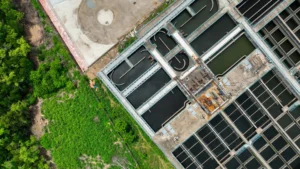
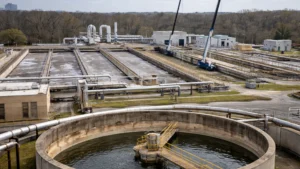
The ideal method for managing wastewater facility assets is to implement a preventive maintenance plan. This includes scheduled downtime for repairs, such as rehabilitating coating and lining systems that protect concrete and steel surfaces from corrosion. In a perfect world, this approach should lessen the likelihood of a facility needing an emergency repair and experiencing unscheduled downtime. Unfortunately, many operating budgets have not kept pace with system demands, forcing operators to exceed the capacities of their facilities. is increases the likelihood of an emergency repair. Facilities operating at maximum capacity have little tolerance for shutdowns of any kind. They need to be back in service as soon as possible, to meet service demands and minimize costs. Both standard maintenance and emergency repairs are costly. Shutting down a system often requires a facility to implement expensive bypass operations to divert the waste stream to other tanks or temporary holding areas until the primary system is up and running again. Bypass operations can cost more than $30,000 per day for a larger plant. Thus, every minute saved in getting the system returned to service means significant cost savings. Fortunately, wastewater facility managers can save time when performing maintenance on coating and lining systems. Newer “quick-return-to-service” coating technology options can enable a facility to rehabilitate and repair concrete and steel surfaces and return them to service in less than 24 hours.
A GROWING NEED FOR REPAIRS
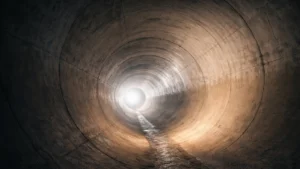
Over the past 50 years, many areas have experienced “urban sprawl” without adding new treatment facilities to manage the increased wastewater volume. They have addressed sprawl simply by adding new sewers to their existing systems, to carry wastewater from new subdivisions and commercial and industrial sites to existing treatment plants. As wastewater must now travel greater distances to reach the treatment facility, this slows waste stream flows and increases dwell times in the lines. Additionally, industrial byproducts entering the waste stream have increased, creating a more diverse mix of organics and subsequently a more septic waste stream. All of these factors contribute to increased corrosion rates on wastewater infrastructure.
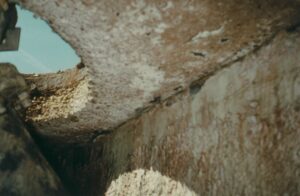
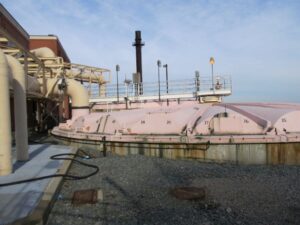
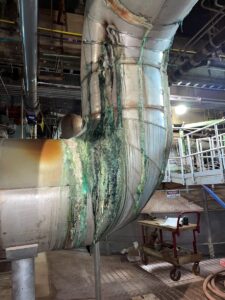
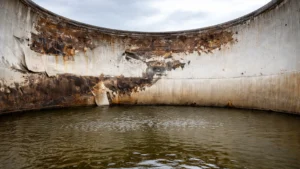
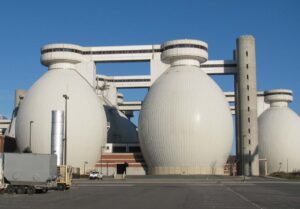
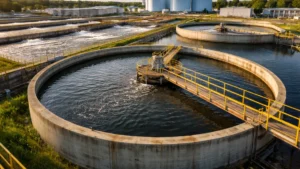
Concrete accounts for approximately 85% of the surface areas that will require maintenance or repair in wastewater facilities. These assets include manholes (brick, pre-cast, or poured), wet wells, lift stations, grit chambers, influent channels, primary and secondary clarifiers, and digesters. The largest contributor to the corrosion and degradation of concrete is the increased level of hydrogen sulfide (H₂S), organic wastes such as fats and grease, and industrial waste. Microbiologically induced corrosion is also a major contributor to the deterioration of concrete. Microbes, such as acid thiobacillus thiooxidans, essential in the breakdown of the waste, ingest the H₂S and excrete sulfuric acid (H₂SO₄.). This reaction lowers the pH of the concrete and causes the cement paste to deteriorate, leaving the aggregate exposed. Abrasion from debris and grit in the waste stream also contribute to the degradation of concrete by eroding the surface and exposing the larger aggregate within the cement matrix. Steel surfaces throughout a wastewater treatment facility face similar threats, as toxic waste streams and gases react with unprotected steel and accelerate corrosion.
FAST-CURING COATINGS
Newer, fast-curing technologies have reduced return-to-service times. Facilities can perform surface preparation, apply repair mortar, apply a fast-curing coating material, and place a system back in service, all within a 24-hour period. Of course, this may not include the time to empty, clean and rinse a tank or vessel, as well as remove any existing coating or lining. However, a single-day return-to service capability could reduce a facility’s bypass operation costs by $180,000 to $270,000.
PERFORMING THE MAINTENANCE
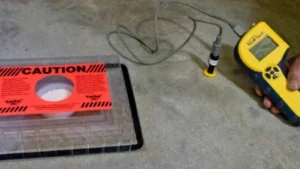
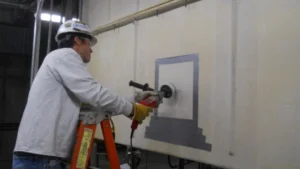
To perform coating and lining maintenance on concrete and steel surfaces, a plant must first shut down or bypass the systems to be repaired or rehabilitated. A typical rehabilitation or repair of an existing concrete substrate will start with stopping any active leaks and all inflow and infiltration (I&I) issues. Contractors must properly address these, or the success of any coating system or repair will be questionable. ere are many methodologies for stopping leaks and I&I, but contractors often use chemical grouting because it is both fast and permanent. Also, personnel can generally apply coatings to chemical grout products soon after application. The next process is surface preparation, which typically involves a combination of methods. First, contractors must remove any existing coating and/or clean the surface to remove any existing contamination. High-pressure hot water cleaning is the preferred method. Once the surface is clean, contractors can use newer methods for preparing the substrate, including wet abrasive or vapor blasting. Standard dry abrasive blasting is not preferred because it creates a larger amount of dust and spent abrasive that must be contained and removed by hand or vacuum truck. Vapor blasting combines small quantities of water along with an abrasive media, creating approximately 90% less dust and often requiring no containment. It can be used for both concrete and steel substrates. Following surface preparation, contractors can complete a concrete repair using some of today’s quick-return-to-service systems. They may use an epoxy-reinforced cementitious repair mortar that can be top coated in as little as eight hours. They may choose calcium aluminate repair mortars that can be top coated in as little as 12 hours, or microsilica mortars that require 18 to 24 hours to cure prior to top coating. All three options are much better than using Portland cement alone, which takes 28 days to cure fully before allowing top coating. Contractors also have options for straight 100% solids epoxy fillers that have a six to 10 hour minimum recoat requirement. Regardless of the coating system used, contractors must resurface the concrete as close as possible to its original plane, with all defects filled and protrusions removed. Once repairs have been made, the lining material can be applied. The three primary technologies are epoxies (typically amine-cured), high build aromatic polyurethanes, or polyurea linings. The fast-curing capabilities of these materials depend on being able to control environmental conditions using heat and/or dehumidification equipment. All three technologies provide a high build capability, which is critical in wastewater applications. To decide which quick-return-to-service system is the most suitable for a given project, the facility will need to consider the substrate and the chemical-resistance and film-build characteristics of the technology. Epoxies typically provide the most across-the-board versatility of the three technologies, as they allow for application to surface saturated dry substrates. Polyurethane and polyurea are more adverse to moisture during application.